Images are AI-generated concepts, not verified Xinchao product or packaging specifications.
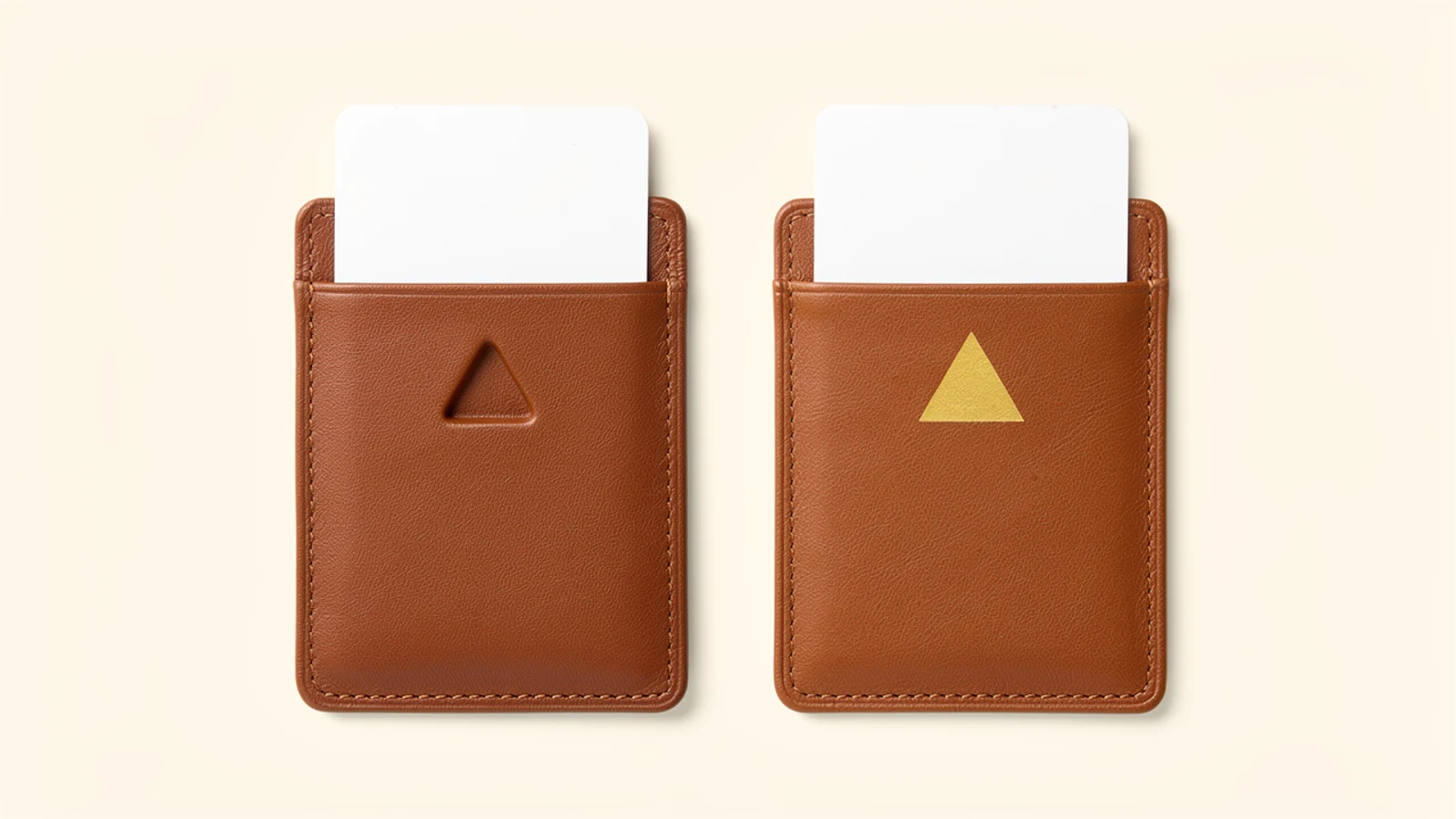
When comparing debossing vs foil stamping for leather card holders, start with the appearance the customer needs: an understated mark formed in the surface, or a mark with added metallic or colored contrast. Then check whether that result works on the selected material, at the intended logo size and in the final position.
This is not simply a choice between a “basic” and a “premium” finish. A quiet blind mark can suit one brand, while a bright foil mark can suit another. For custom leather card holders, the useful comparison is the approved result on the actual construction, not a finish name on a quotation.
Clarify what the supplier means by each method
Blind debossing produces a recessed mark without added foil or ink. Foil stamping adds a transferred foil finish; depending on the process and material, it may also produce a recessed impression. The two terms therefore do not describe completely separate physical effects.
For example, leather goods maker Corium describes both blind and foil debossing, with foil added during its pressing process. This explains why one supplier may call a finish “foil debossing” while another calls it “foil stamping.” Do not approve an order based on terminology alone.
Ask for a sample or close-up reference showing the intended result. Write “recessed mark, no added color” or “gold foil mark with the approved impression” into the brief as appropriate. If the customer actually wants a raised mark, clarify that separately; a raised result is not the same as a recessed one.
Compare the finishes against the brand’s priorities
| Decision point | Blind debossing | Foil stamping |
|---|---|---|
| Intended visual effect | Surface relief without added color | Added metallic or colored finish |
| Main approval question | Is the mark visible enough on this material? | Is the foil appearance and coverage acceptable? |
| Color instruction | Approve the material and resulting impression | Approve the material plus the specific foil finish |
| Small detail review | Look for lost lines and closed spaces | Look for incomplete coverage and merged details |
| Variant planning | Review each material and surface finish | Review each material-and-foil combination |
| Purchasing comparison | Confirm tooling, setup and sample scope | Confirm tooling, setup, foil and sample scope |
Treat these as review priorities rather than universal rankings. The method name does not establish which option costs less, lasts longer or reproduces finer detail. Those outcomes depend on the proposed process, artwork and material, and need an order-specific response.
Approve the actual material, not just its color name
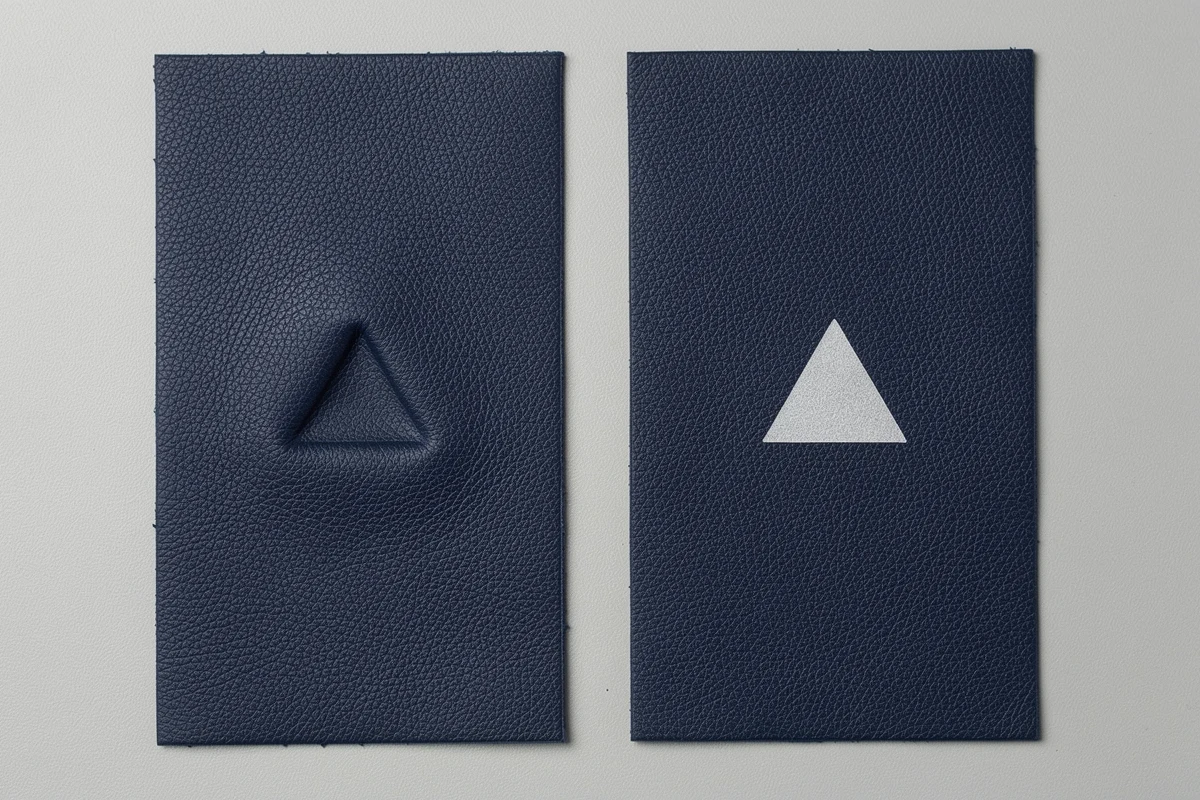
A tan swatch and a tan finished holder can have different textures, coatings or backing. An attractive mark on one is not automatic approval for the other. Record the material reference used for the decoration sample and tie it to the production specification.
Inspect the mark from an ordinary viewing distance and at an angle. With blind debossing, ask whether the logo remains recognizable under the lighting in which the product will normally be seen. Do not rely only on a close-up photographed with strong side lighting that exaggerates the impression.
For foil, look at the complete logo rather than a single bright area. Check edges, enclosed spaces and solid sections. Review the chosen metallic or colored finish in person where possible: a screen image is not a calibrated color or reflectivity standard.
If the order includes leather and synthetic material options, request separate confirmation for each. Avoid treating “leather-like appearance” as proof that both materials will respond identically to the same decoration process. Keep any proposed substitution subject to approval of the decorated sample.
Evaluate the logo at its finished size
A logo that looks clear across a computer screen may become difficult to read on a compact card sleeve. Start with the real imprint area, not the maximum size of the artwork file. Check the smallest lettering, narrow gaps and thin outlines at the size that will appear on the product.
For a practical comparison, ask for both proposed finishes using the same artwork size and similar placement on the intended material. Otherwise, a large foil sample compared with a small blind mark does not isolate the effect of the finishing method.
If details are lost, discuss whether to simplify the mark, enlarge it or choose a different placement. Obtain brand approval for any artwork change. Do not silently thicken a registered logo or remove a tagline simply to make a sample look cleaner.
Keep file preparation separate from finish approval. A usable vector file helps define the artwork, but it does not prove that the physical mark will meet expectations. The final decision should reference both the approved artwork revision and the decorated sample.
Check placement on the finished holder
A mark can look centered on a flat panel yet appear poorly placed after the holder is assembled or loaded. Review the finished item with cards inserted, especially when the logo sits near a pocket opening, stitched edge or viewing window.
Ask the supplier to confirm the proposed imprint area and placement reference. Rather than writing only “center the logo,” specify which panel is the reference and which edges define the position. Any agreed placement tolerance should come from the production review, not an arbitrary number added to the brief.
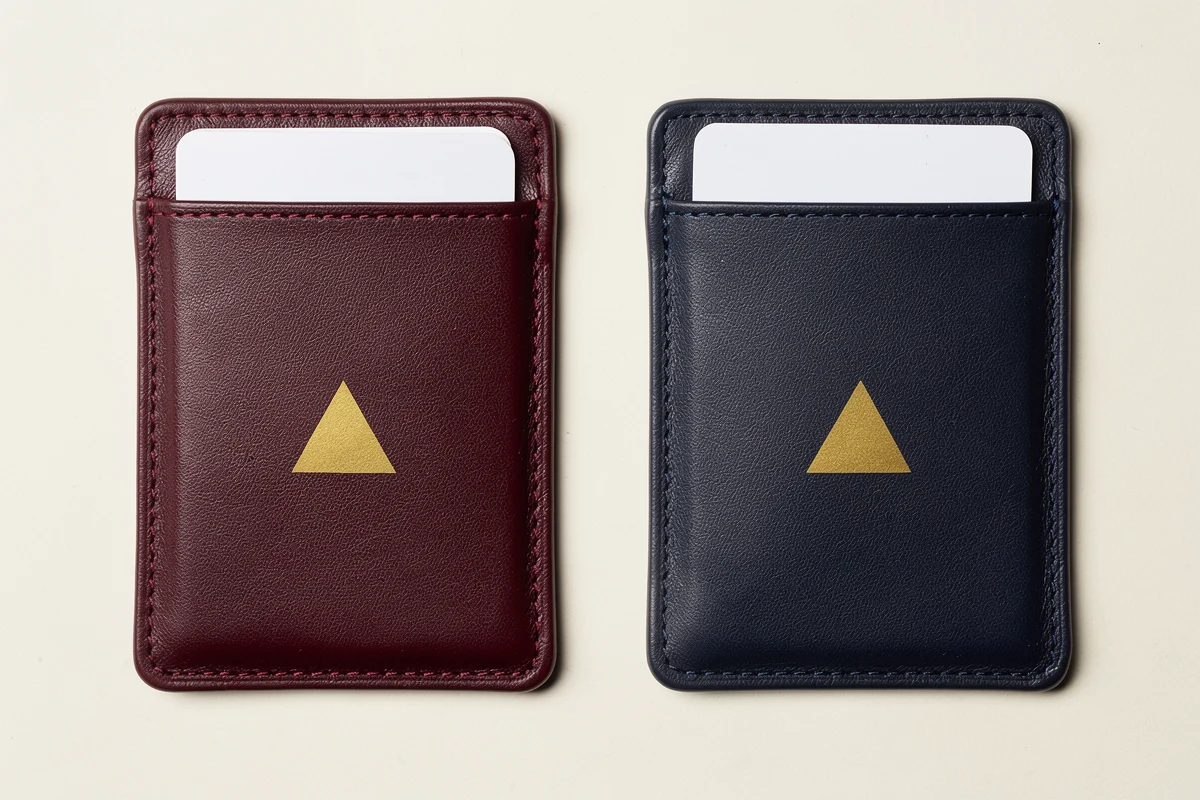
Check every colorway that affects the approval decision. A foil selected against navy may give a different visual balance against burgundy. Likewise, a blind impression approved on a smooth surface may not be equally apparent on a strongly textured alternative.
For a gift set, review the logo on the holder itself rather than approving it only inside presentation packaging. Packaging can change the overall impression, but it cannot resolve a poorly reproduced mark.
Compare quotations using the same scope
Ask each quotation to identify what is included: artwork preparation, tooling, sampling, decoration, additional positions and variant changes. Confirm whether changing the logo size requires a revised setup or tool, and whether repeat-order charges have been defined.
Do not assume that an existing tool is suitable simply because the logo is unchanged. The proposed size, placement, material and finish still need review. Similarly, avoid assuming that a foil color change is the only difference between two quotes when the sample or setup scope may also differ.
If durability is important to the customer, describe the intended handling and request an agreed evaluation method. Review the actual finish after the agreed checks and record the acceptance criteria. Do not promise that blind marks never change or that foil can never wear away; a finish name is not a lifetime guarantee.
Create a finish approval record before bulk production
Use one short record that connects the aesthetic decision to the order:
- Product construction and material reference.
- Artwork file name and revision.
- Finished logo dimensions and position.
- Blind or foil finish, including the approved foil reference where relevant.
- Decorated sample identifier and approval date.
- Approved colorways and any unresolved variants.
- Agreed visual and handling checks.
- Tooling, setup and repeat-order assumptions requiring confirmation.
If the only reference available is a photograph, note that limitation instead of calling it a physical sample approval. Where appearance is important, reviewing the actual decorated item can prevent different interpretations of depth, shine and contrast.
For a Xinchao inquiry, provide the intended material, product layout and brand reference together. Ask for the proposed decoration method to be reviewed against that combination before treating the requested finish as confirmed.
FAQ
What is the difference between blind debossing and foil stamping?
Blind debossing creates a recessed mark without added foil or ink. Foil stamping adds a transferred foil finish and may also create a recessed impression. Confirm the intended appearance with a sample rather than relying only on the method name.
Is foil stamping always more expensive than blind debossing?
Not necessarily. Compare quotations with the same artwork size, material, quantity, positions and sample scope. Ask the supplier to separate tooling, setup and decoration charges instead of assuming a price difference from the finish name.
Can the same logo be used for both finishes?
The same basic artwork may be a starting point, but its smallest details must be checked at the finished size for each process. Any simplification or size change should be approved before tooling and production.
Can one decorated sample approve every material color?
Not automatically. Color, texture and surface finish can change the appearance of the mark. Identify the combinations covered by the approval and review additional variants where their appearance matters.
Which finish is more durable on a leather card holder?
There is no reliable universal ranking based only on the method name. Ask for evaluation of the actual material, finish and intended handling, with agreed acceptance criteria. Avoid treating either finish as a lifetime guarantee.
To compare decoration options for your order, contact Xinchao with the holder design, material reference, logo and preferred visual effect.