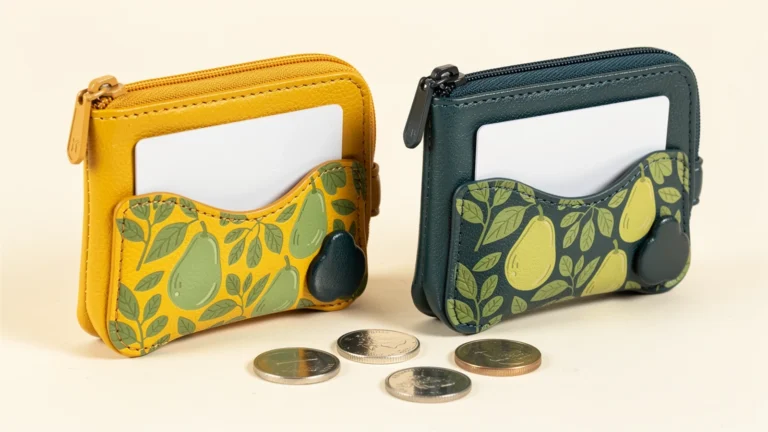
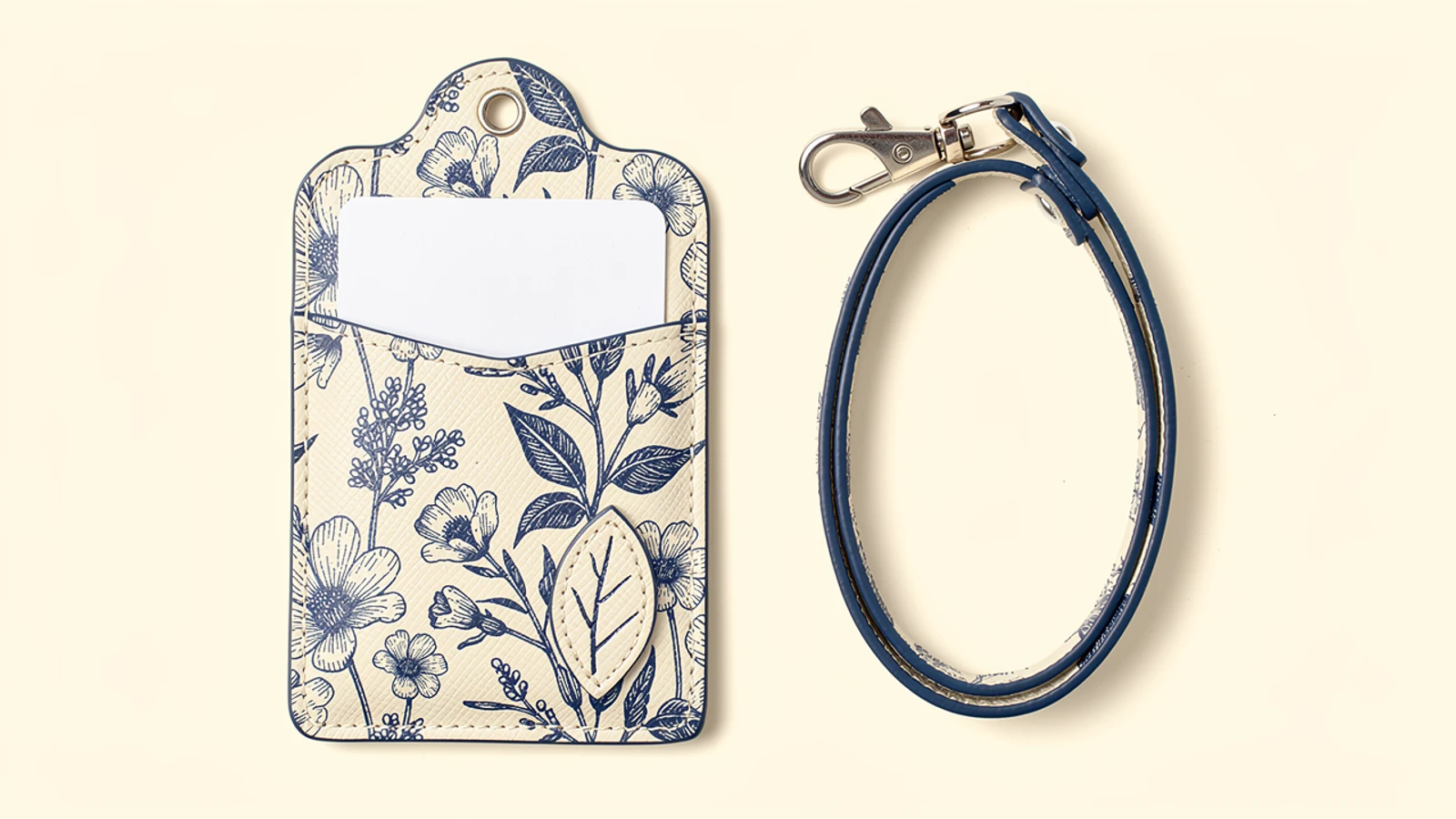
Images are AI-generated design concepts, not production photographs or approved Xinchao specifications. PU denotes synthetic leather, not genuine leather.
A custom pass case and strap set should be approved as one assembled product, not as two attractive components seen separately. The holder carries the main illustration; the strap repeats or supports that visual identity. The connector, artwork orientation and final pairing determine whether the finished set feels intentional.
For Japan-facing merchandise, this approach is useful when developing printed PU leather card holders in several colors or original artwork versions. PU is synthetic leather, not genuine leather. The illustrations here show short-loop strap concepts. A neck strap is a different specification and needs its own suitability review; the concepts do not demonstrate neckwear performance or establish production dimensions.
Specify exactly what belongs in the set
Start with a component list: one holder, one named strap type, the agreed connecting hardware and the packaging. Decide whether the strap arrives attached or separate. If an image shows a charm, reel or decorative tag that is not included, remove it from the sales image or identify it clearly. “With strap” should not leave the buyer guessing which accessory will arrive.
Japanese retail already uses coordinated sets. For example, MARTY's official neck strap and ID pass case listing describes a paired product and distinguishes an additional phone strap that is not included. That is a useful example of clear set contents, not a specification for Xinchao or evidence that every strap serves the same purpose.
Define the holder independently too: card orientation, independent pocket count, intended card and any sleeve. One or two card pockets can be a practical initial brief; three to five require a separate review of construction and loaded use. Neither the number of visible faces nor the inclusion of a strap establishes the number of usable pockets.
Give the holder and strap different artwork roles
Let the holder carry the focal illustration and use a smaller repeat, color band or simplified motif on the strap. Copying the full holder image onto a narrow strip often makes the important elements difficult to recognize. A large flower on the case might become small petals or a simple stem repeat on the strap, while staying within the same original visual identity.
Plan the strap as a manufactured piece, including its reverse, folded ends, stitch lines and the area around the connector. Decide which sections remain visible when assembled. Keep critical wording away from folds and hardware, and ask for the actual artwork template before finalizing placement. Do not assume a universal printable margin or that the full flat layout will be exposed.
Color approval must include both components side by side. A shared digital color value is a design instruction, not a guarantee of identical appearance on different substrates or finishes. Even when both are PU, surface texture and material selection may differ. If a textile strap is proposed instead, review it as a separate material and print process.
Use an agreed physical reference where color is important and record whether the goal is a close match or deliberate contrast. A coordinated navy strap need not reproduce every tone in a multicolor holder. This can make the set clearer, but the buyer and supplier should approve that decision rather than discovering it at packing.
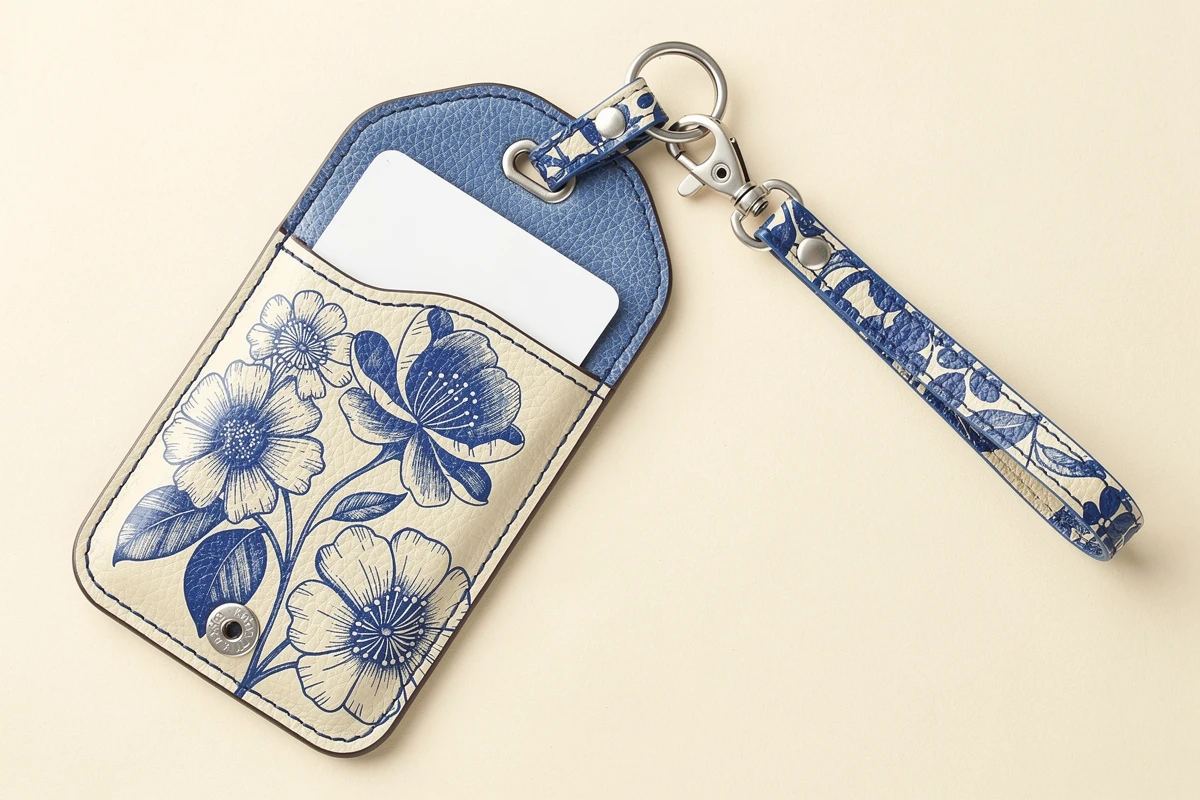
Check the connected set in its intended orientation
Assemble the chosen clasp, ring and holder before approving the product. Check that the clasp can be fitted, its gate can close and the ring has room to move without forcing against an applique or seam. A hardware photo alone does not demonstrate compatibility with the reinforced attachment on the actual holder.
Insert the intended card and observe how the holder sits when held by the strap. Note whether the main artwork faces the expected direction, whether the strap twists and whether the connector covers any important detail. Test access to each card pocket with the strap fitted; an attachment near an opening can change the available finger space.
Keep functional checks proportionate to the intended application. A clasp that closes during a short inspection is not evidence of a verified load rating, anti-loss guarantee or long-term durability. Where strength or other performance is a purchase requirement, agree the test method and acceptance criteria with the supplier. Do not attach an unverified numerical claim to a visually convincing mockup.
If a neck strap is requested, specify it separately rather than lengthening the illustrated short loop. Intended users, release features and the use environment need a suitable review. This article focuses on coordinating and assembling a set, not on choosing between attachment categories; the lanyard versus badge reel guide covers that earlier decision.
Add shaped layers without blocking the attachment
An irregular outer silhouette and a thin printed PU overlay can make the holder distinctive without making the strap equally complex. Keep the internal card area usable, and leave the attachment zone clear. A large decorative point beside the ring may look good in a front-view image but interfere when the clasp rotates.
Specify the raised element as a separate part when a real material layer is intended. The artwork file should not rely on a printed shadow to communicate its thickness or fixing method. Confirm the shape, location and attachment through the sample, with views from the front, reverse and side.
The strap also needs its own review: edge appearance, folded areas, print direction and contact between hardware and printed surfaces. Avoid placing a delicate focal motif at a fold simply to align it in one photograph. A simpler strap repeat may be easier to judge across the whole assembled item.
Control version pairing before packing
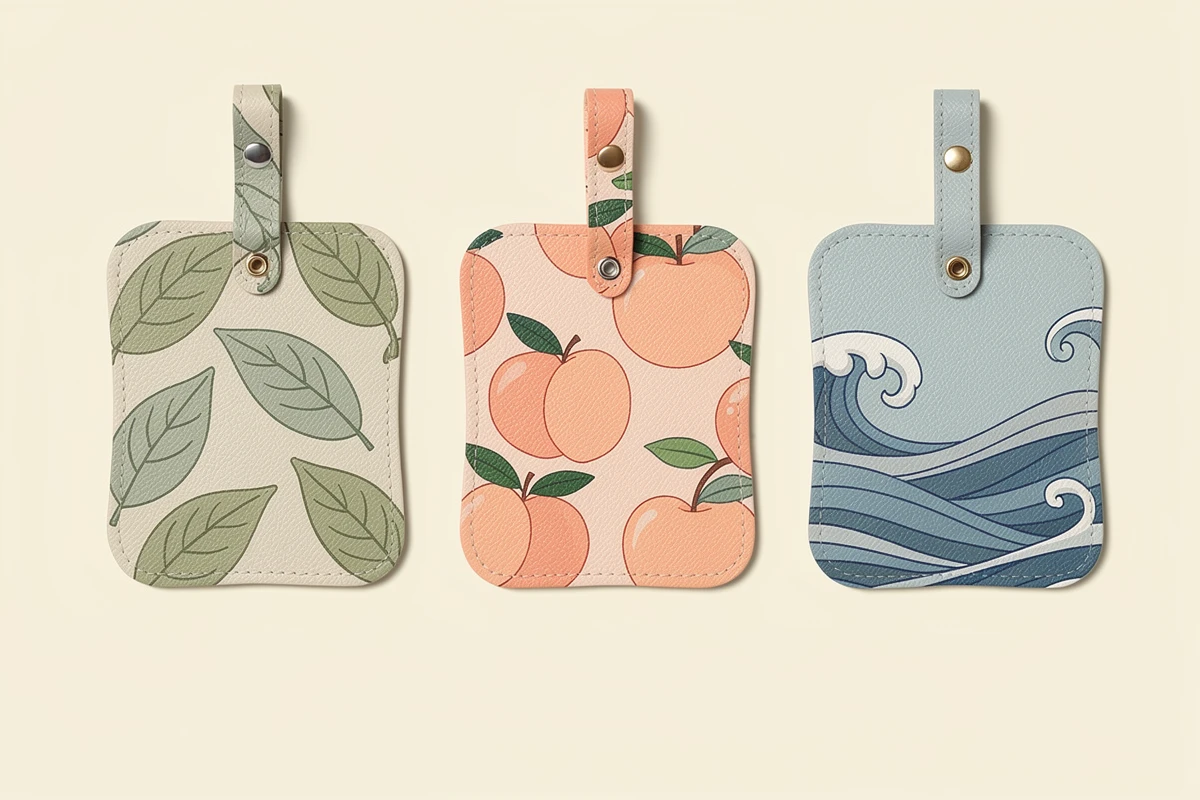
When several colorways are ordered, create a pairing matrix rather than relying on names such as “green set.” Assign separate references to the holder artwork, strap artwork, hardware and packaging, then combine them under one set reference. The identifiers below are examples, not existing Xinchao SKUs.
| Example set | Holder artwork | Strap artwork | Packing instruction |
|---|---|---|---|
| Set A | Sage botanical, revision 2 | Small leaf repeat, revision 1 | Attach the specified matching strap |
| Set B | Peach fruit, revision 1 | Small fruit repeat, revision 1 | Pack the strap beside the holder |
| Set C | Blue wave, revision 3 | Simple wave repeat, revision 2 | Attach and show the approved front |
Approve a packed sample of every distinct pairing rule. Check that the right strap is present, the chosen assembly state is followed and the intended illustration is visible. If packaging holds the strap behind the holder, open a sample to confirm that it has not been omitted or substituted. A correct total quantity does not prove that each set has been paired correctly.
Decide in advance how mixed cartons, spare straps and replacement components will be identified. A later strap replacement should refer to the approved component version, not just the original order date. If a material or hardware substitution is proposed, review the assembled set again because the change can affect both appearance and operation.
Build one approval package for the complete product
Keep the component list, artwork files, material references, connector details, pocket specification, pairing matrix and packing photographs together. Separate the approval of print appearance from the approval of assembly and packing. A correction to one component should be traced to every set that uses it.
For quotation, provide quantities by set, number of artwork versions, intended card configuration, strap type and packaging requirements. Ask the supplier to confirm feasibility, sample arrangements, minimum quantities and timing for that brief. The Xinchao leather card holder overview is a starting point for the holder, while the set specification defines what must be developed and delivered together.
FAQ
Does a pass case with a strap always include a neck strap?
No. Specify the strap type and included components explicitly. A short loop, neck strap and other attachment options are different configurations, not interchangeable descriptions.
Should the strap use exactly the same illustration as the holder?
Not necessarily. The holder can carry the main illustration while the strap uses a simplified repeat or coordinated color. Approve both together so that the difference is intentional.
Will matching digital color values look identical on both parts?
They do not guarantee identical appearance. Review physical samples together because material, surface texture, finish and print process can affect the result.
Can the holder have layered decoration and several card pockets?
Those can be proposed, but the internal storage area, loaded access and clearance around the attachment must be reviewed. Specify independent pockets separately from the decorative layers.
How can incorrect color combinations be reduced during packing?
Use a set reference linked to the approved holder, strap, hardware and packaging versions. Provide a pairing matrix and approve packed samples for the different pairing rules.
To discuss a coordinated pass case and strap set, send Xinchao your artwork and component list with the required quantities for each pairing.