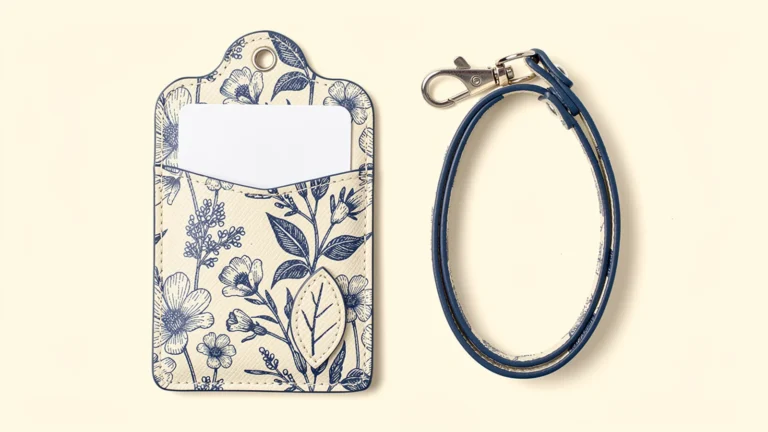
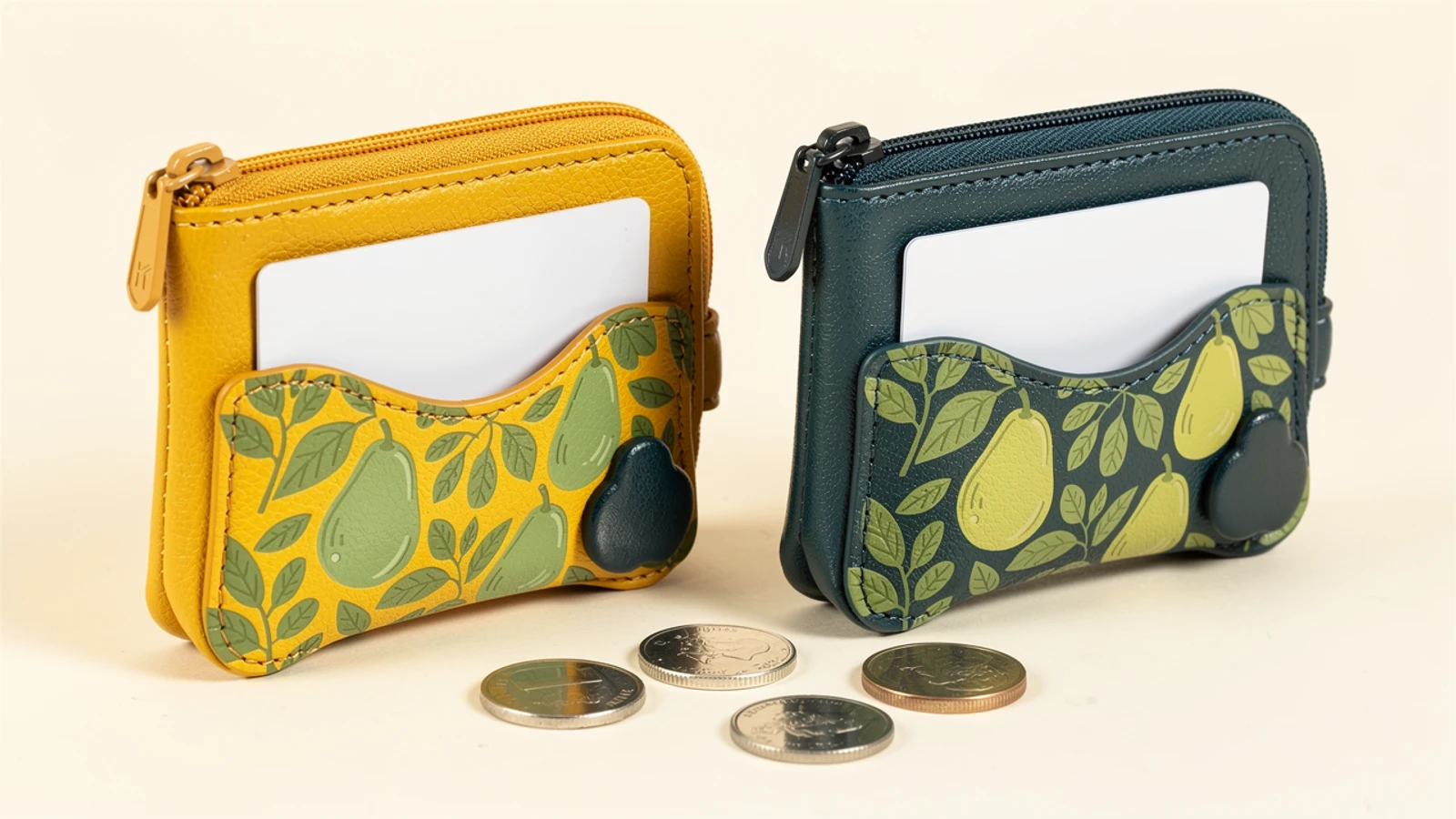
Images are AI-generated design concepts, not production photographs or approved Xinchao specifications. PU denotes synthetic leather, not genuine leather.
A custom coin pocket pass case combines two different jobs: keeping a card easy to reach and containing loose change. A colorful illustration may make the product appealing, but the design succeeds only when the coin compartment can be opened without disturbing the card pocket. For a Japan-facing merchandise project, start with the carrying routine and then build the printed artwork around it.
This guide covers a printed PU leather card holder with a separate zipped coin compartment. PU is synthetic leather, not genuine leather. It is a design and sample-review framework, not a promise that every proposed construction is available without development. The material, compartment arrangement and final specification need confirmation for the particular order.
Define what the coin compartment is for
Write a small use scenario before choosing the outline: one transit card and occasional change, two separately stored cards and a few coins, or a card holder that also needs a small emergency-cash compartment. These are different briefs. Do not silently turn the product into a full wallet by adding keys, folded notes and accessories to the same small space.
There is a real Japanese product category behind the idea. The official SEAL pass case specification lists a card case and a coin case separately. That supports the existence of the combination; it does not establish a standard capacity, market share or a specification for Xinchao. Its materials and construction should not be transferred to a printed PU concept.
Define the intended contents as a photographed sample load. Record the actual card type, whether a protective sleeve is used, and the selection of coins. Avoid claims such as “holds plenty of coins” unless the approved load is described. A buyer should be able to reproduce the same review with the same contents.
Separate the card opening from the zipper
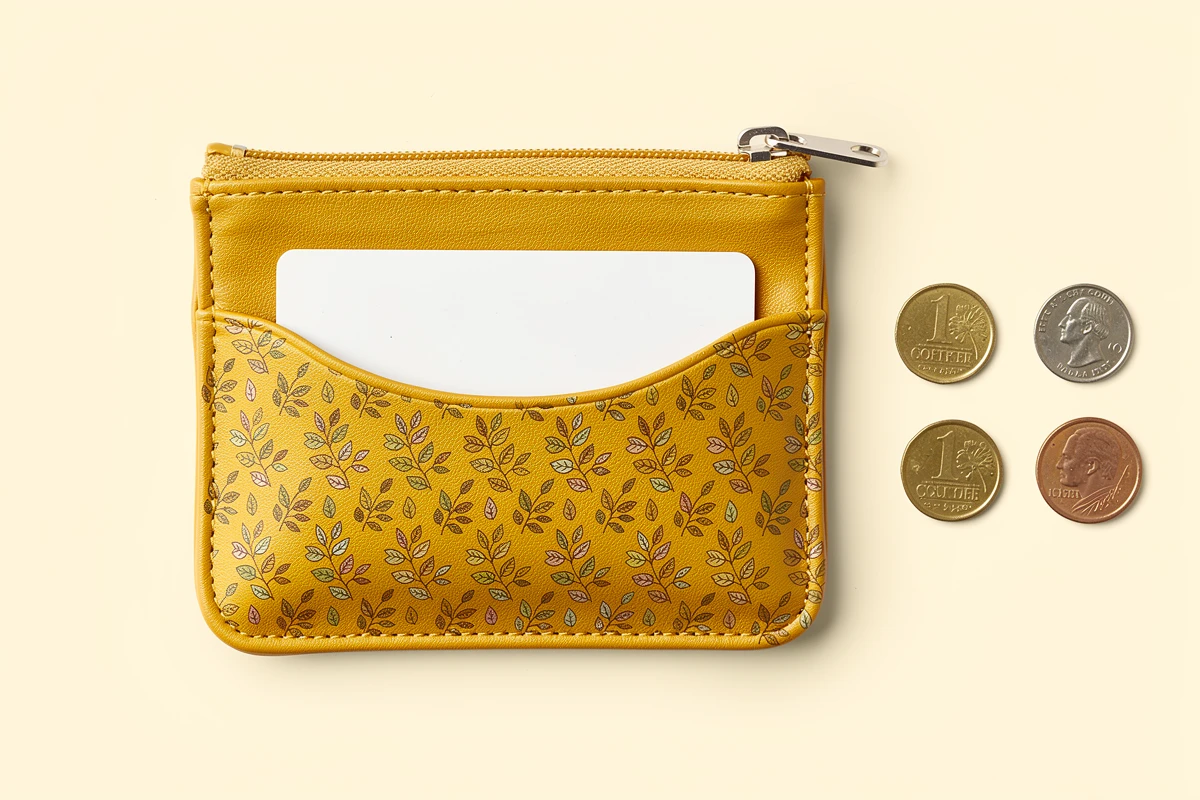
Give the card and coin compartment different access paths. A zipper opening directly beside the card mouth may make the two areas compete for finger space. A decorative extension or a bulky pull can create another obstruction. Sketch both actions: removing the card and opening the coin pocket while the card remains inserted.
For an initial development brief, one or two independent card pockets are a straightforward starting point. Three to five can be explored if the intended use justifies the extra layers and the sample supports them. This is a layout choice, not a verified statement about sales popularity. Pocket count is also not the same as card capacity: one opening should not automatically be described as suitable for several stacked cards.
Keep coins out of the card storage channel. A separate lining or divider must be specified in the construction drawing rather than inferred from an exterior mockup. Ask the sample maker to show the internal arrangement and seam boundaries. The photo should reveal which opening leads to which compartment without requiring an explanation from the designer.
| Review item | What to define | What to observe on the sample |
|---|---|---|
| Card pocket | Intended card and sleeve | Insertion, exposure and removal |
| Coin compartment | Agreed example coin load | Access, containment and usable opening |
| Zipper route | Opening side and pull location | Clearance from card mouth and fingers |
| Divider | Separate storage boundary | No unintended passage between compartments |
| Attachment | Intended ring or strap location | Access with the attachment fitted |
Review the loaded pouch, not just the empty outline
A flat empty sample does not show how loose coins redistribute. Inspect the agreed load with the pouch resting flat, held upright and being opened over a tray. Watch where the bulk gathers and whether the card pocket changes shape. If the zipper needs pressure from the other hand to close, document that observation instead of treating it as normal by default.
Open and close the sample through a review sequence agreed with the supplier. Record zipper catching, lining caught in the teeth, difficult corners, coins approaching the opening and changes in card removal. This practical check is not a certified durability test, and a short demonstration cannot justify a service-life claim. Formal test conditions and acceptance criteria must be agreed separately where needed.
Check the specific card in its intended reading setup, if contactless use is part of the brief. Coins, other cards and the way the holder is presented can be relevant to that evaluation. Do not promise that a card will read through every loaded pouch, or describe the product as RFID-blocking without supporting evidence. An easy-to-remove card remains useful when in-holder reading is not confirmed.
For a deeper thickness review, see the guide to loaded thickness in slim printed pass cases. Here the main decision is whether the coin feature improves the intended routine enough to justify its additional structure.
Keep printed layers clear of moving parts
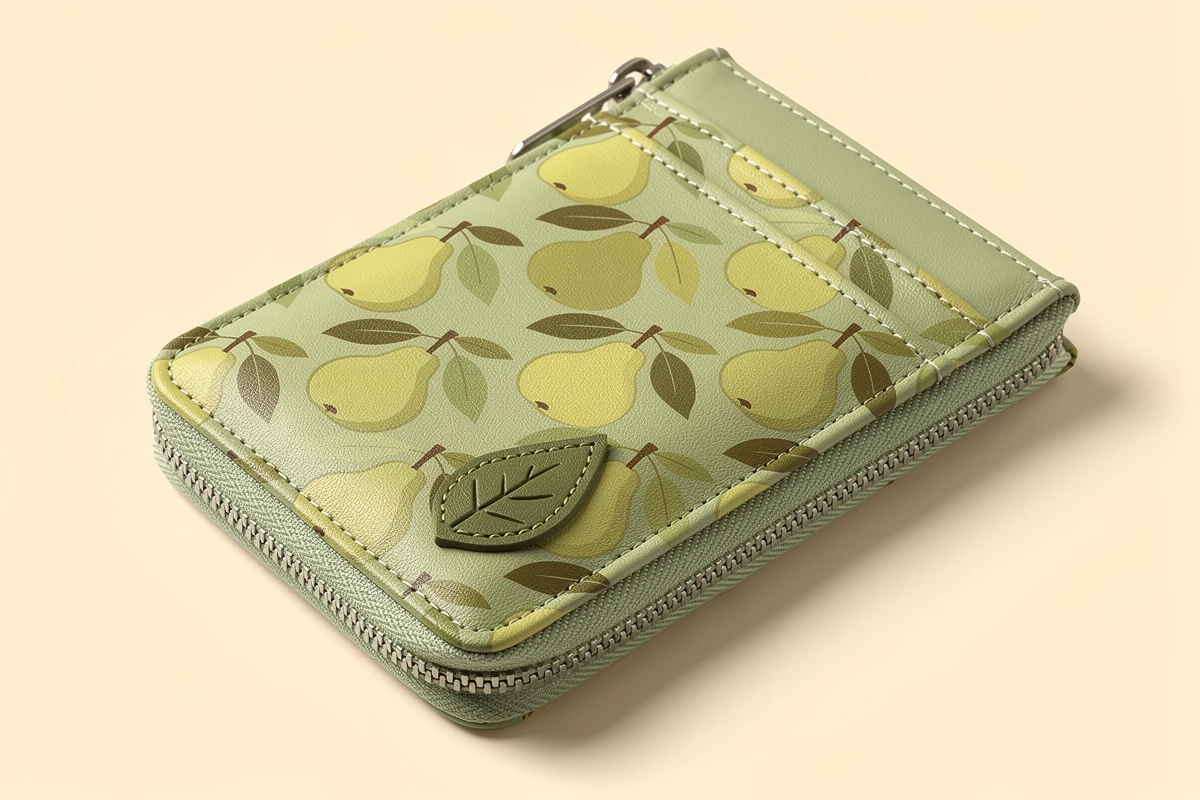
Use full-color artwork as the main visual feature: original fruit illustrations, abstract travel motifs or a brand-owned character can work without relying on a large raised ornament. A shallow pear-shaped or leaf-shaped PU overlay can introduce a physical layered effect, while an irregular outer contour makes the silhouette more distinctive.
Keep those elements away from the zipper track, the pull's travel and the card opening. The drawing should distinguish a printed shadow from a real separate material layer. It should also show where that layer is stitched or otherwise attached, with the final attachment method confirmed during development. “3D effect” is too vague for a purchase specification.
Preserve the card-sized internal storage area even when the outside is shaped. A decorative curve should not narrow the usable pocket or force the zipper through a corner that has not been sampled. Compare the outline with a card inserted, the zipper fully open and the intended attachment fitted. One attractive closed view is not a complete approval set.
Print placement needs an empty and loaded check. Coin bulge can change how an illustration reads across a surface. Keep critical text, a face or a small logo away from seams and areas that distort in the approved loaded condition. The supplier should confirm artwork boundaries and print suitability for the chosen PU, rather than applying generic margins from another product.
Make the approval record specific enough to reorder
Build one approval package containing the artwork revision, material identification, pocket drawing, zipper and pull selection, lining arrangement, trim references and example load. Add photographs of the same sample empty and loaded, including the coin opening and card access. Give the approved configuration a clear revision identifier.
Separate appearance findings from construction findings. A print-color correction does not close a zipper-access issue. Equally, changing the divider or zipper position may require a fresh artwork check. The review record should show the issue, the requested change, the revised sample and the final decision instead of relying on a message saying “looks good.”
When asking for a quotation, state whether the product includes a strap, individual packaging or multiple artwork versions. Ask which changes affect development, price and timing; do not assume a universal MOQ or delivery window. If a simplified card-only version is also being considered, compare it against the same use scenario rather than only comparing its empty thickness.
The Xinchao leather card holder overview provides the broader product starting point. For this version, the useful brief is a clearly separated card-and-coin layout with an approved print and load—not merely “a pass case with a zipper.”
FAQ
Is a coin pocket counted as another card slot?
No. Specify the coin compartment separately from the independent card pockets. A shared exterior outline does not make the two storage areas interchangeable.
Can a coin pocket pass case have two card pockets?
Two independent card pockets can be proposed, but the divider, loaded bulk and access must be checked on the actual construction. The pocket count alone does not establish capacity.
Can the case use an irregular shape and layered decoration?
Yes, as a design proposal. Keep a usable internal card area and review the decoration against zipper travel, card access and the attachment point before approving the sample.
Will a transit card work without being removed?
That must be checked with the intended card, reader and agreed contents. Do not assume reliable in-holder reading or RFID-blocking performance from the appearance of the case.
What should be supplied for a custom quotation?
Provide the intended contents, card pocket count, coin compartment concept, artwork, material preference, attachment and packaging requirements, quantity and required delivery date. Ask the supplier to confirm feasibility and commercial terms.
To discuss a printed coin pocket pass case, send Xinchao your artwork and carrying scenario together with the pocket layout you want reviewed.