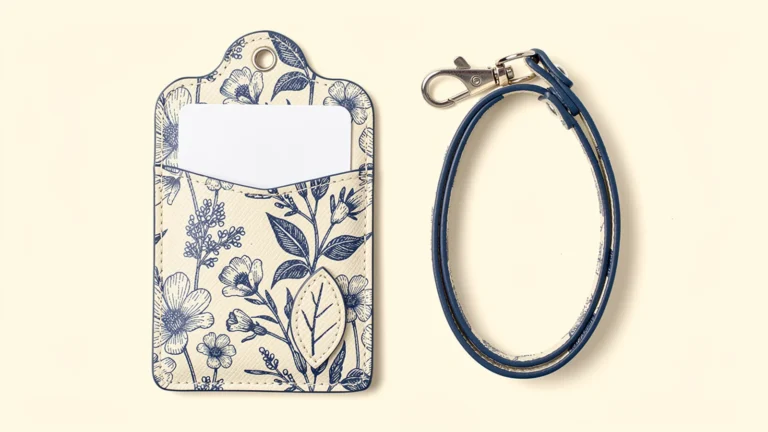
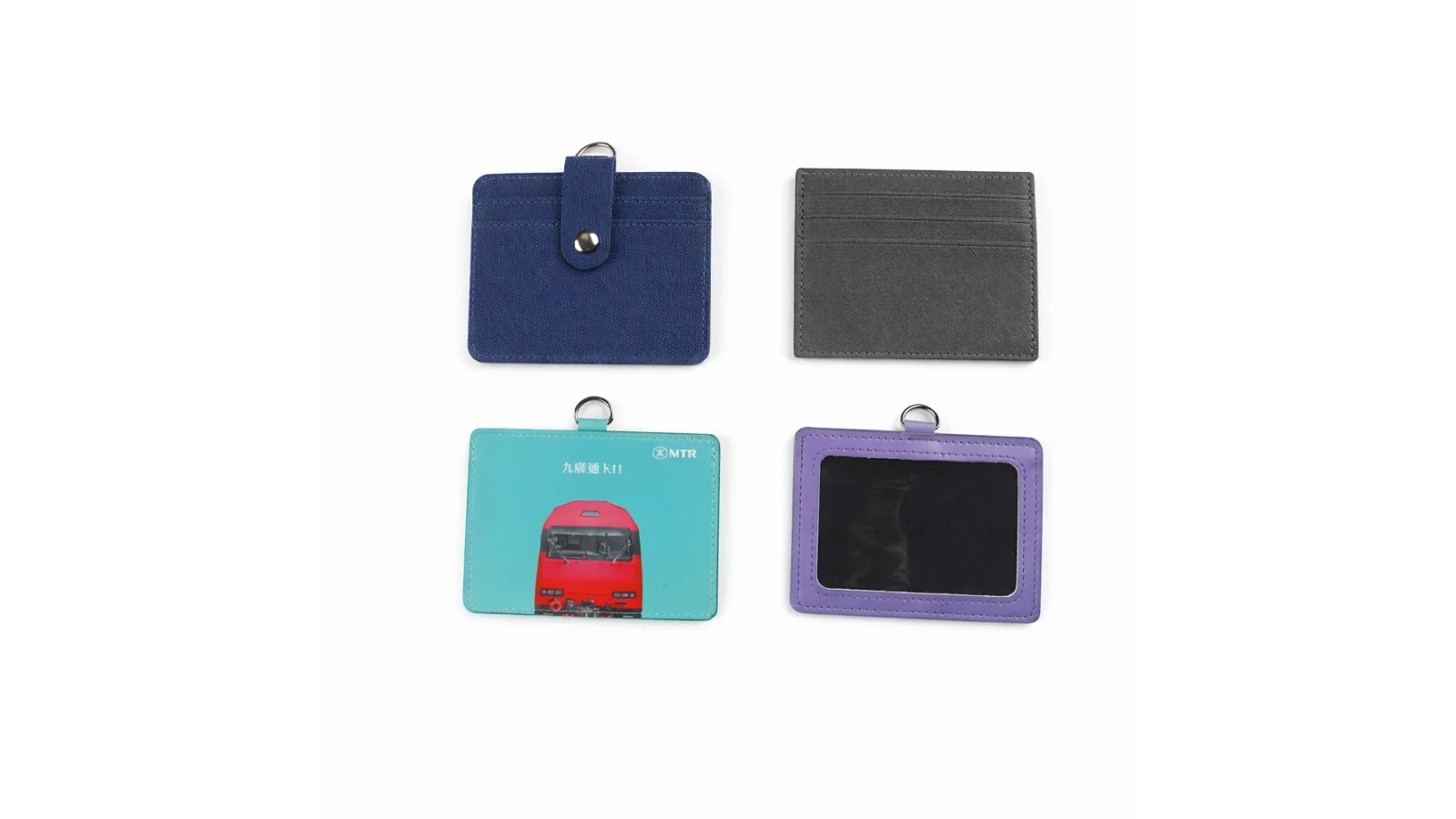
A leather card holder sample checklist should cover the actual cards, pocket access, visible information, branding, construction and packaging before a bulk order is approved. Start with the intended use: a pocket card sleeve and a staff badge holder need different checks. Then compare the physical sample with a written specification, record any differences and decide whether a revised sample is needed. A good-looking photograph alone is not enough to approve fit or daily handling.
Start with the card and the carrying method
Send your supplier the card dimensions, thickness and intended number of cards. If practical, provide representative cards or non-sensitive substitutes with matching physical dimensions. Specify whether the holder will sit in a pocket, hang from a lanyard or attach to a reel.
For an employee badge, list what must remain visible: the photograph, name, barcode or expiry date. For a gift card sleeve, decide whether easy removal or a more enclosed presentation matters most. These requirements should be agreed before judging the sample.
If you are still selecting a format, review Xinchao’s leather card holder solutions before finalizing the sample brief.
Leather card holder sample checklist
Use the following table as a project checklist, not as a universal testing standard. Agree measurable acceptance criteria with the supplier where the project requires them.
| Check | What to review | What to record |
|---|---|---|
| Card fit | Insert the intended number of representative cards | Card dimensions, loading and any difficulty |
| Removal | Use the opening or thumb cutout as intended | Whether the user can retrieve a card comfortably |
| Display | View the badge through its window | Any covered text, photograph or code |
| Carrying hardware | Assemble the intended lanyard, clip or reel | Component model, orientation and interference |
| Material | Compare the sample with the specified material and swatch | Material description, color and finish reference |
| Logo | Compare the finished piece with the approved artwork | Size, location, orientation and visible defects |
| Construction | Inspect seams, edges, lining and attachments | Photos and locations of discrepancies |
| Packaging | Pack the complete product and accessories | Packing arrangement and label version |
Keep a sample identifier on the checklist. If multiple colors or structures are being developed, avoid treating approval of one configuration as approval of every variant.
Decide what the sample is meant to approve
Ask whether the piece is an appearance reference, a structural prototype or a pre-production sample made to the proposed order specification. Record any substituted material, temporary hardware or unfinished operation. An exception is not necessarily a reason to stop development, but it must remain outside the approval until resolved.
For example, if the supplier uses a temporary clip while the intended connector is being sourced, you can review the artwork without approving the final wearing arrangement. Keep the unresolved connector on the revision list and check the complete set before production authorization.
Check fit using the assembled product
Review the sample with its intended card load, rather than judging an empty pocket. Check insertion and removal, then inspect how the holder closes or sits when loaded. Note any bending, exposed corners or movement that conflicts with the agreed use.
Separate overall dimensions from usable pocket space. For procurement purposes, request both a drawing and a physical fit review rather than relying on the outside size alone. Do not prescribe an arbitrary extra allowance for every design; ask the supplier to propose dimensions and confirm them with the sample.
For wearable badges, attach the intended accessory during approval. Check the orientation, whether the clip obstructs the opening and whether the card can be accessed without awkward handling. Informal handling checks are useful for finding issues, but they do not establish a certified load rating or a service-life claim.
Inspect seams, edges and attachments
Compare both sides of the sample. Look for loose threads, missed stitching, visible adhesive, rough edges and attachments that interfere with card access. Mark each observation on a photograph rather than relying on a general description such as “poor finishing.”
For edge-painted designs, review corners and bends as well as long straight edges. For a windowed holder, inspect the viewing area with the intended card inserted. For a snap or tab, check the sample in its intended loaded condition. These are practical review steps; they are not substitutes for agreed durability or safety tests.
Procurement note: a change to a seam, pocket or attachment may affect more than appearance. After a structural revision, repeat the relevant fit and handling checks instead of approving only the changed photograph.
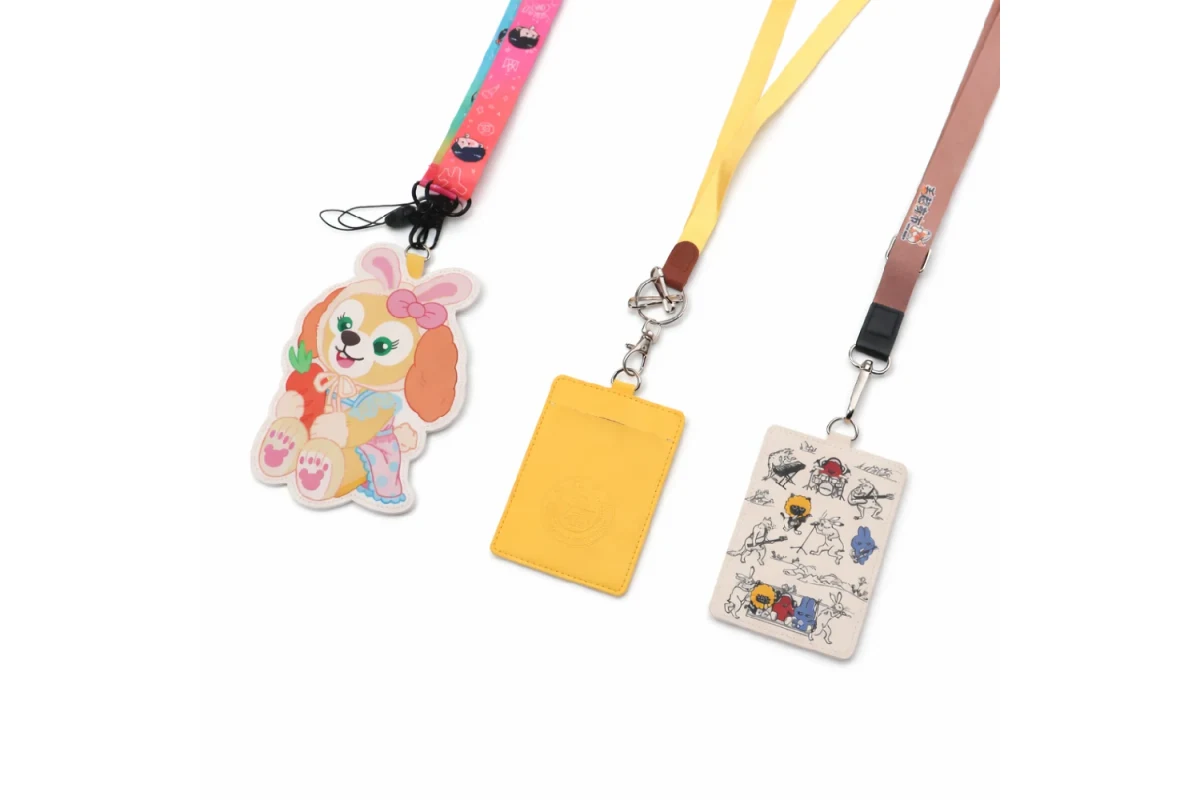
Confirm materials and branding separately
Write the material description clearly in the purchase specification. Avoid using “leather” as the only description when the quotation offers several material constructions. Ask the supplier to identify the outer material, lining and any additional functional layers.
Use the agreed physical reference to review color and surface appearance. If color accuracy matters, agree how it will be evaluated and what variation is acceptable. A screen image should not be the sole acceptance reference.
Next, compare the finished logo with the approved artwork. Check placement, readable details, alignment and the appearance near seams or cut edges. Approval should cover the chosen material and branding process together; if either changes, ask whether another sample is necessary.
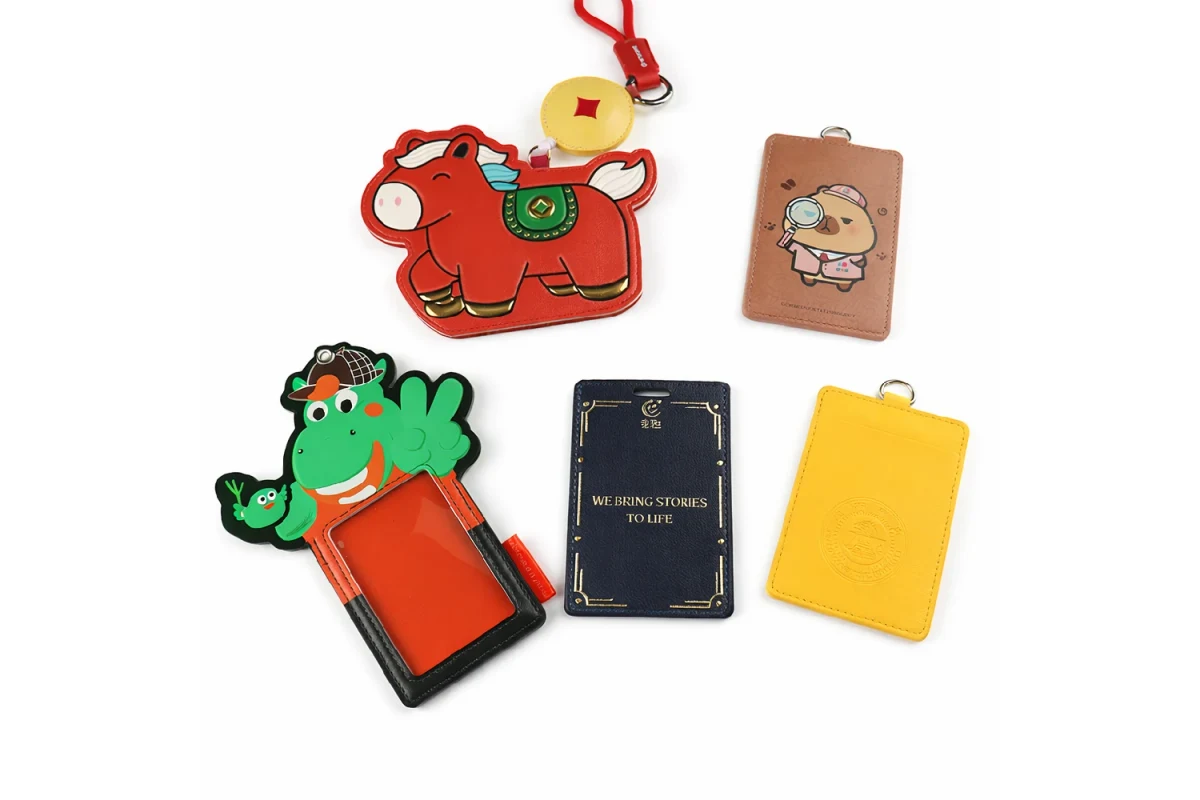
Xinchao describes printing, foil stamping, embossing and custom shapes among its customization options. Availability for a particular artwork and material should be confirmed during the project discussion.
Define the card-reading requirement before approval
Write down the intended behavior: should a user present the card while it remains inside the holder, remove it for use, or store it in a design intended to block reading?
If card-reader performance is part of the order, identify the actual card and reader system and agree a verification method. Ask what the supplier’s evidence covers, including the tested construction and conditions. Avoid approving a broad “RFID compatible” or “RFID blocking” statement without a defined requirement. Do not treat a photograph or a casual demonstration as proof that every system will behave the same way.
Turn observations into a revision list
Describe each issue with its location, a photograph and the required outcome. “Improve quality” is difficult to act on. “The window covers the last line of the badge; revise the window against the attached card layout” gives the supplier a specific problem to resolve.
Separate the decisions into three groups:
- Approved items that can remain as sampled.
- Items requiring a revised sample before approval.
- Open questions requiring documentation or a defined check.
Name the person who can approve revisions. When a revised sample arrives, check the changed area and any related feature that could have been affected. Retain the approved sample, artwork and specification under matching revision identifiers.
Compare quotations against the approved specification
A quotation is easier to compare when it states the material, structure, branding, accessories, packaging and quantity. Ask suppliers to identify sample charges, tooling or setup costs and delivery assumptions separately where applicable.
Confirm what starts the production schedule: artwork approval, sample approval, deposit or another agreed milestone. Request a project-specific lead time. A general website statement should not replace the delivery agreement for your order.
Before giving production approval, make sure the quotation and specification refer to the same revision. Any substitution after approval should be documented and reviewed before it is accepted.
Separate sample approval from bulk-order inspection
The approved sample records the design you accepted. Bulk-order inspection addresses whether the manufactured goods meet the agreed requirements. Keep these decisions separate: approving a development sample should not automatically release the finished shipment.
Where a formal inspection plan is needed, agree its scope with the supplier or inspection provider. ISO 2859-1:2026 covers acceptance sampling by attributes for lot-by-lot inspection. It does not provide a universal card-holder fit, logo-position or stitching specification; those product requirements still need to be defined for the order. This checklist does not claim Xinchao certification or compliance with that standard.
Ask the inspection provider to specify how the lot will be sampled, how defects will be classified and what acceptance rules apply. Do not select an acceptance quality limit (AQL) solely because it appears in a generic sourcing article. Any functional checks should identify the equipment, conditions and pass criteria agreed for the project.
Issue a clear production approval
Before releasing the order, confirm that the approval package includes:
- The sample identifier and final specification revision.
- The approved material and color references for each variant.
- Final artwork, logo position and branding process.
- Card capacity, orientation and required visible area.
- The complete accessory and packaging configuration.
- Resolved revisions and any explicitly accepted exceptions.
- The order quantity by variant, delivery agreement and inspection requirements.
Use an explicit approval statement that names the applicable sample and documents. If a material or component must change later, ask for the proposed change and its effect on the approved requirements before accepting it.
FAQ
Is a sample photograph enough to approve a custom card holder?
A photograph can help review layout and visible appearance, but it does not establish physical fit or handling. Use a physical sample when those features affect the purchase decision.
Should I provide the actual cards for sampling?
Provide representative cards when practical, or non-sensitive substitutes with matching dimensions and thickness. Also state how many cards each pocket must hold.
Can one approved sample cover every color and design?
Only if the approval scope explicitly covers those variants. Record which materials, colors, artwork and structures have been reviewed and which still need confirmation.
Does approving a sample mean the bulk order has passed inspection?
No. Sample approval establishes the agreed design reference. The finished order must still be assessed against the agreed specification and inspection requirements before shipment release.
What should I do if the sample differs from the quotation?
Record the discrepancy and request an aligned quotation, specification or revised sample. Resolve the difference before authorizing bulk production.
To discuss a sample for your project, contact Xinchao with your card dimensions, quantity, artwork, material preference and intended carrying method.