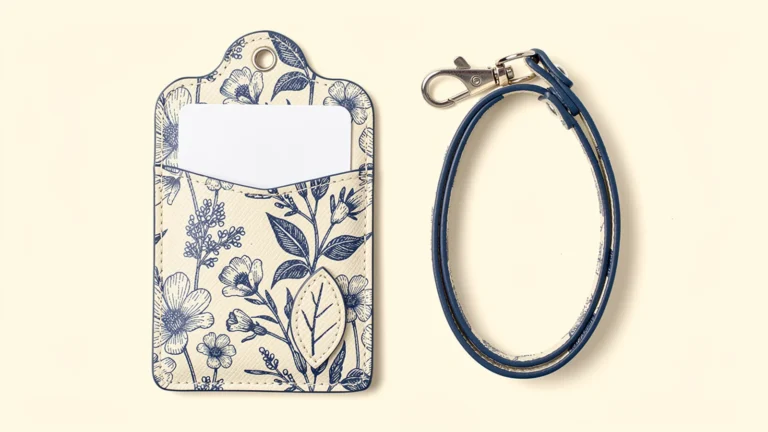
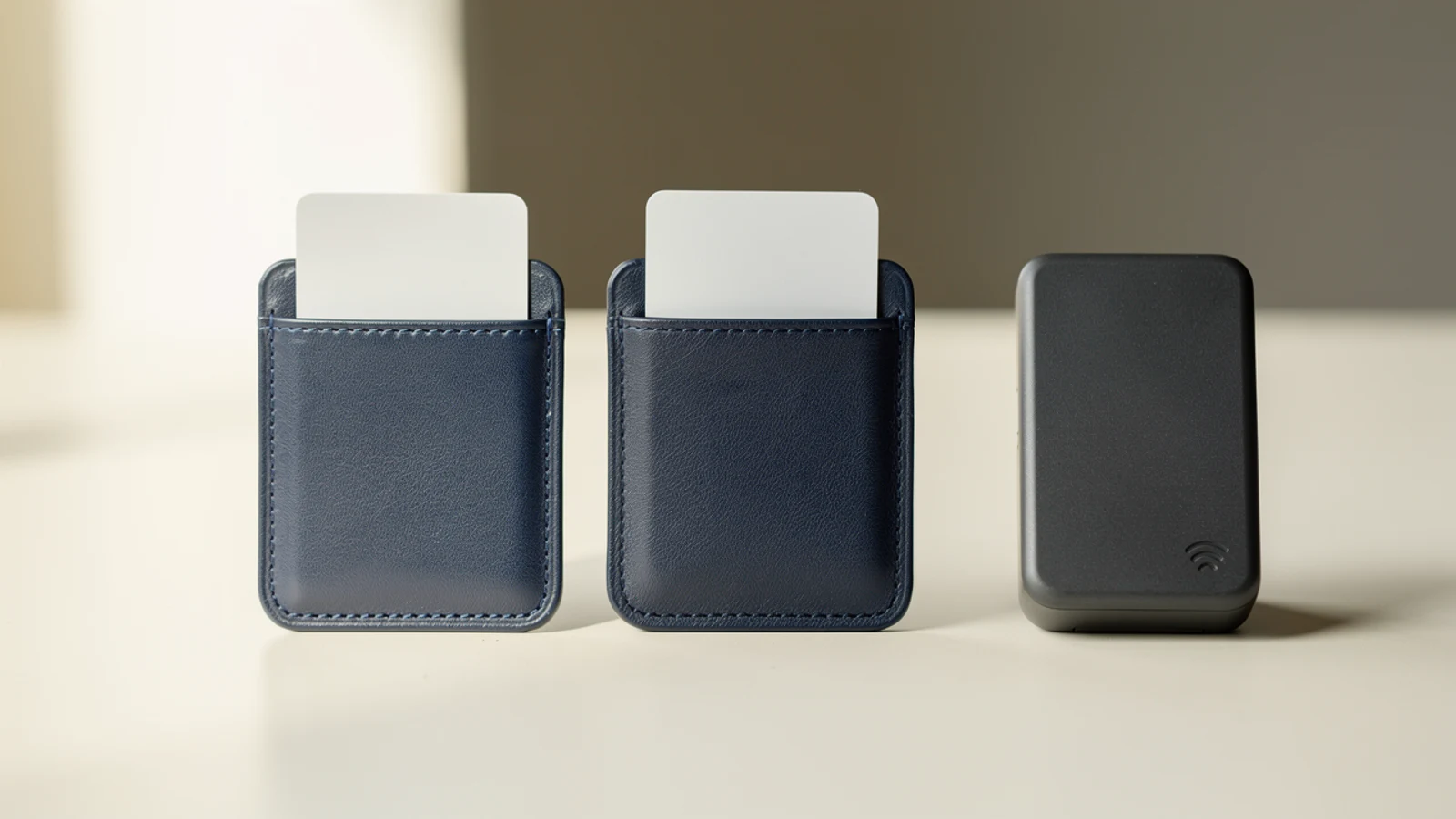
Images are AI-generated concepts, not verified Xinchao product or packaging specifications.
Choosing RFID blocking vs non-blocking card holders starts with a practical question: should the card be readable while it remains inside the holder? For an employee who taps through several doors each day, easy access may be the priority. For a card that should remain unreadable until deliberately removed, a verified blocking design may be appropriate. Neither choice is automatically better for every order.
For buyers sourcing custom leather card holders, the important distinction is between an intended function and demonstrated performance. A leather exterior, metallic-looking lining or RFID label does not establish how the finished holder behaves with your cards. Confirm the card system, the pocket arrangement and the required user action before approving a sample.
Start with the intended reading behavior
Write down what a user should do at the reader. “Tap the badge while it stays in its pocket” and “remove the card before presenting it” are different requirements. A product selected to prevent reading can create an inconvenience if the customer expects tap-through access.
A non-blocking holder is one that is not specified to provide RFID shielding. That description is not a guarantee that every reader will work through it. The complete combination still needs a practical check, including the actual card, reader, holder and normal carrying position.
For a blocking design, define the protected storage position. Is the card fully inserted? Must a flap be closed? Does the requirement cover one pocket or every pocket? These details belong in the specification, not in assumptions made after delivery.
| Buying requirement | Direction to investigate | What to verify |
|---|---|---|
| Employees tap a badge without removing it | Non-blocking construction | Reliable reading in the normal wearing position |
| A stored card should not be read until deliberately presented | A specified blocking construction | Blocking in storage and reading after removal |
| One card needs easy access and another has a shielding requirement | Separately defined pockets or separate holders | Each card’s behavior in every intended position |
| A printed badge is used only for visual identification | Choose around visibility and retention first | Whether any electronic function is actually required |
Identify the card system before asking for shielding
Ask the buyer’s access-control administrator or card provider for the relevant card technology and reader models. Do not infer those details from the card’s color or its credit-card-like shape. If the system information is unavailable, record that gap before promising compatibility.
Frequency coverage is product-specific. For example, ID Stronghold’s Classic badge holder documentation distinguishes its standard model from a version intended for 125 kHz proximity cards. That is a useful reminder to request coverage details; it is not evidence that an unrelated leather holder provides equivalent performance.
Keep the brief limited to the information needed for evaluation. There is no reason to send live access credentials, card numbers or sensitive badge photographs with a general quotation request. Coordinate any functional trial with the organization responsible for the system and use authorized test credentials where available.
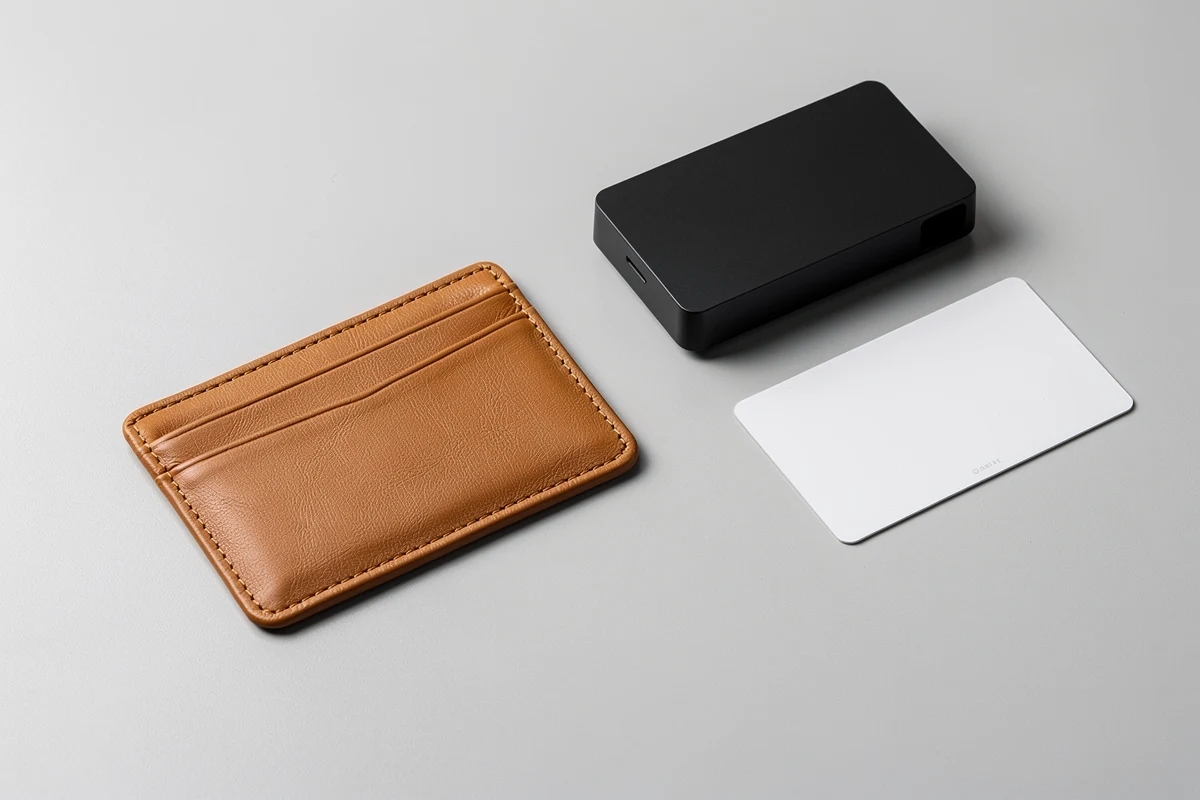
Test reading and blocking as separate requirements
A failed read is not, by itself, proof of successful shielding. The card may not be active, the reader may be unavailable, or the card may be presented incorrectly. Establish a working baseline first.
Use a written sequence for a buyer-side sample check:
- Confirm that the authorized card works outside the holder on the selected reader.
- Insert it into the designated pocket using the intended orientation and load.
- Present the holder in the normal position and record what happens.
- Repeat for the other reader models included in the buying requirement.
- Remove the card and confirm that normal reading resumes.
- Record the sample revision, card type, reader model, pocket and result.
For a tap-through holder, the desired observation is successful reading during normal use. For a blocking holder, it is the agreed no-read behavior in storage followed by successful reading when intentionally presented outside the protected position. These are different acceptance criteria, so avoid a generic “RFID passed” checkbox.
This practical check only describes the tested configuration. It is not a universal security certification or a substitute for specialist evaluation where the customer requires one. If a formal performance claim is part of the purchase, agree on the applicable test method, scope and evidence before using that claim in sales materials.
Specify pockets rather than relying on a single product label
A multi-pocket holder introduces more questions than a single sleeve. Which pocket is intended for the access badge? Where will payment, transit or spare cards be carried? Are users expected to remove one card or the complete holder?
Create a simple pocket map in the order brief. Give each position a name and describe its intended behavior. For example, “front pocket: badge must read while inserted” is clearer than “office RFID wallet.” Treat that wording as a requirement for supplier review, not as a statement that the proposed construction can already meet it.
If users will carry several cards, test that actual arrangement. Do not approve a one-card demonstration and assume it covers a different load. Where the behavior is inconsistent, simplify the arrangement and investigate the cause with the system owner before changing the specification.
Separate holders can also be worth discussing when two functions conflict. A convenient layout on a drawing is not useful if users cannot consistently present the intended card. The right solution is the one whose behavior can be explained and verified in ordinary use.
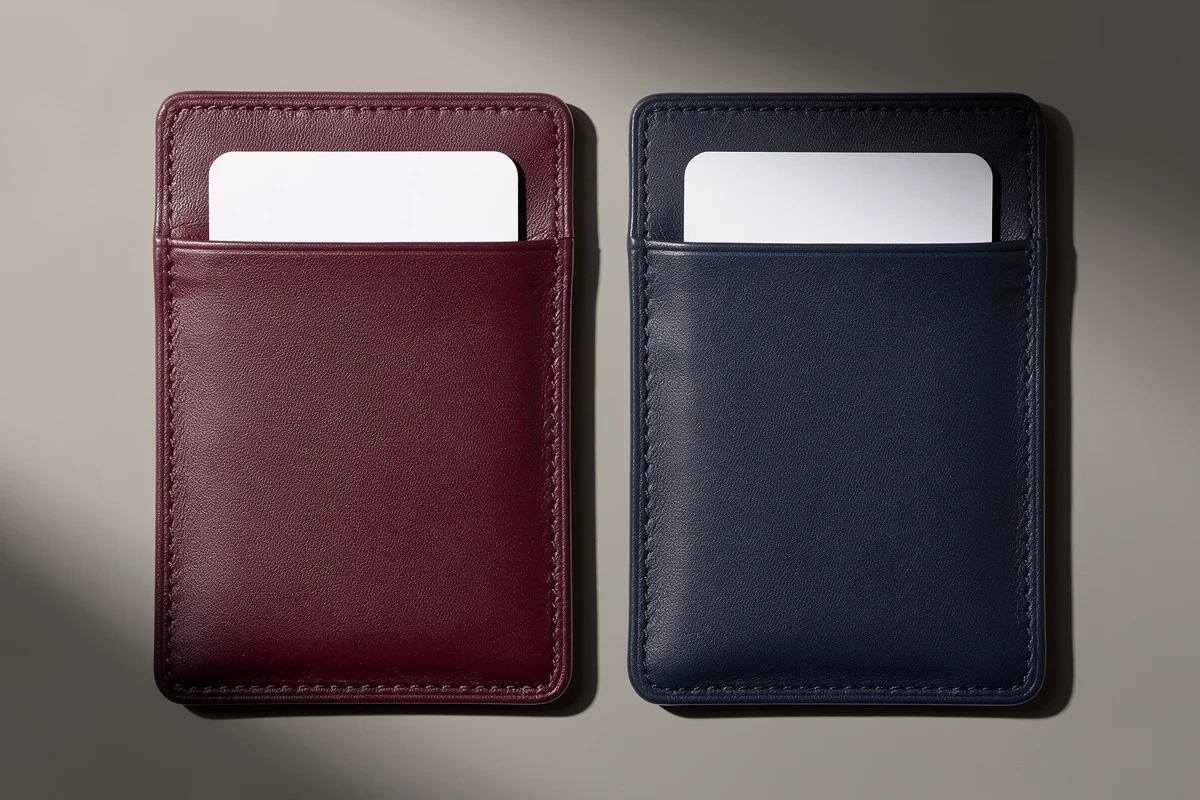
Check usability after adding the functional requirement
Shielding is only one part of the buying decision. The card still needs to fit, remain secure and be removable through the agreed opening. Review the finished construction rather than approving a loose lining swatch as if it represented the complete product.
During a small user trial, observe whether people can find the correct pocket, remove the card without bending it and return it securely. Check the loaded holder with any lanyard or reel included in the order. If a card must be removed frequently, the opening and handling sequence deserve particular attention.
Keep aesthetic approval separate from functional approval. A sample can have the right leather color and logo but fail the required reading behavior. Conversely, an acceptable functional result does not approve the stitching, fit or decoration.
Put the evidence and limitations into the order brief
Before placing a bulk order, ask for a clear response to these points:
- The intended card technology and reader models.
- The named pocket and required card position.
- Whether reading should be allowed or prevented in that position.
- The test method and records available for the proposed finished construction.
- The handling action required to use the card.
- Any untested configurations or exclusions.
- The sample revision that will control production approval.
Avoid broad promises such as “blocks every signal” or “prevents all card fraud.” A holder’s documented behavior in a defined setup does not support those statements. For Xinchao inquiries, submit the functional brief alongside the material, size, logo and quantity requirements so feasibility and supporting evidence can be reviewed rather than presumed.
FAQ
Is an RFID blocking card holder always better?
No. The choice depends on whether the card should be readable while stored. A blocking design may conflict with tap-through access, while a non-blocking design may not meet a specified shielding requirement. Test the intended use before ordering.
Does a leather exterior prove that a holder blocks RFID?
No. Exterior appearance does not establish shielding performance. Ask about the finished construction, the supported card system and the evidence for the exact pocket and position you intend to use.
Can an access badge be read through a non-blocking holder?
It may be possible, but the description alone does not guarantee compatibility. Check the actual badge and reader with the fully loaded holder in its normal carrying position.
Does one failed scan prove that shielding works?
No. First confirm that the card works outside the holder. Then compare results in the defined storage position and after removal. A single failed scan can have causes unrelated to shielding.
What should a buyer send with an RFID holder inquiry?
Send the card technology if known, reader models, intended pocket layout, required reading behavior, material and logo preferences, quantity and requested evidence. Do not include live credentials or sensitive card data in a general inquiry.
To discuss a suitable construction, contact Xinchao with your card-use requirements and a clear description of what the holder must allow or prevent.