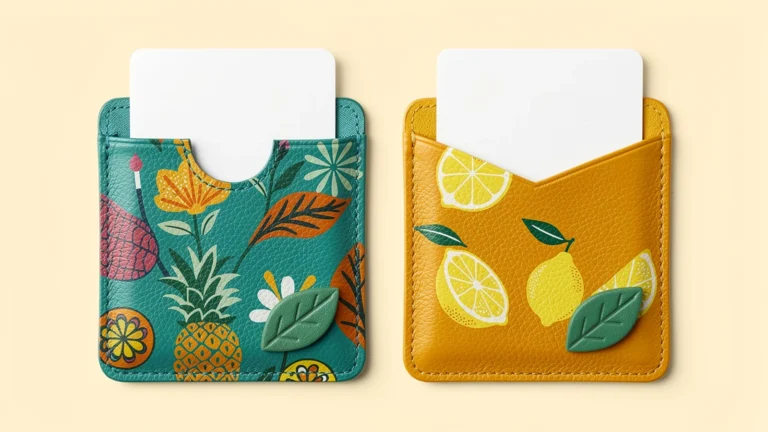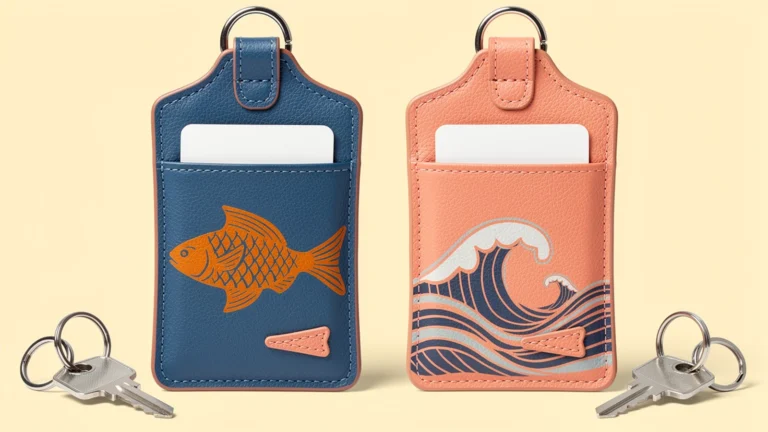
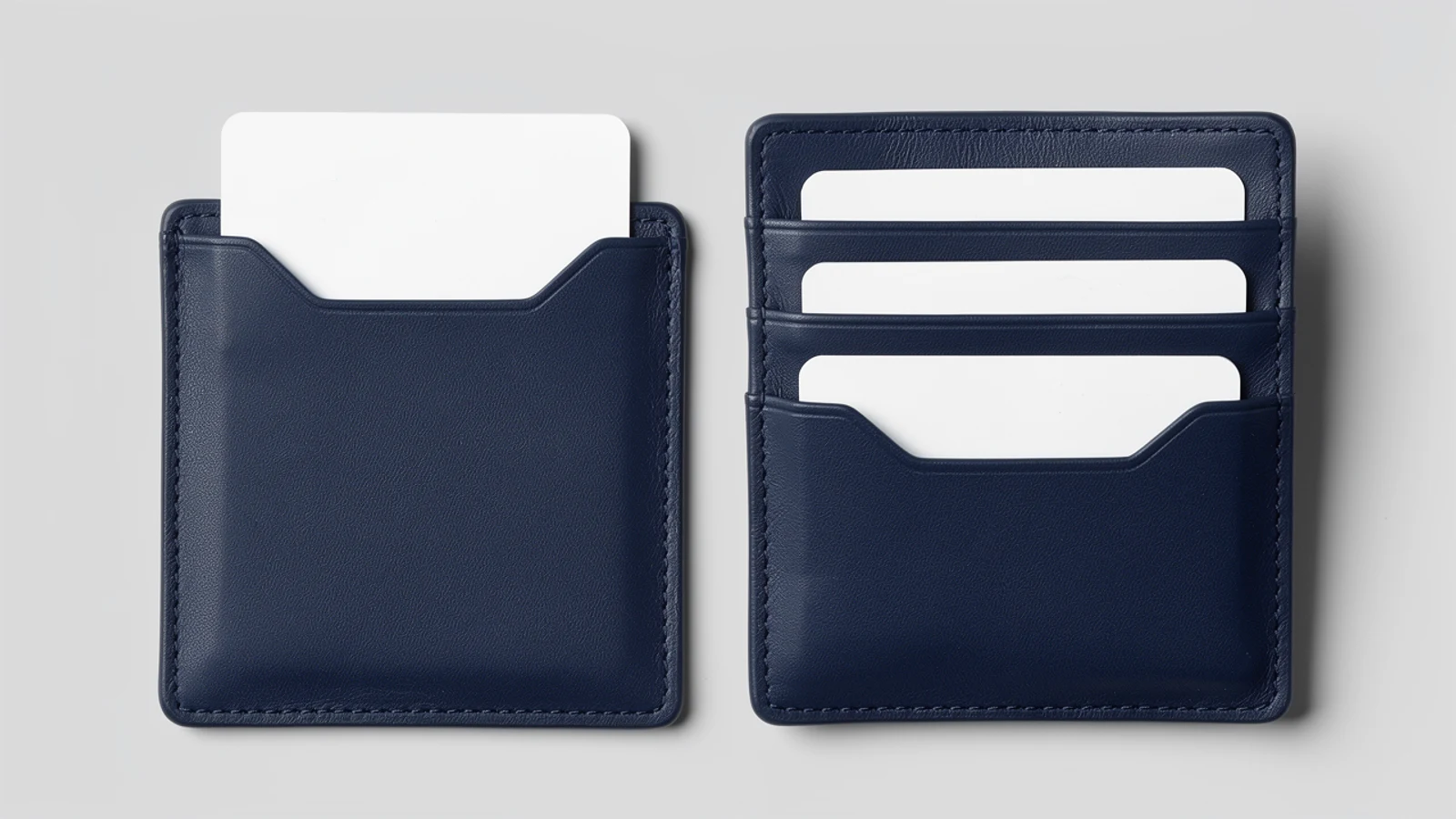
Images are AI-generated concepts, not verified Xinchao product or packaging specifications.
A single-pocket vs multi-pocket card holder comparison should start with what users carry and how they retrieve it. One dedicated card may need only a simple sleeve. Several cards with different purposes may benefit from separate positions. More pockets are useful only when they improve the intended routine without creating unacceptable bulk or awkward access.
For buyers ordering custom leather card holders, the decision is a layout requirement, not just a card-count claim. Define the cards, their positions and the normal load before choosing a construction. Approve the finished holder with that load rather than relying on the number of visible slots in a photograph.
Start with a card inventory, not a maximum capacity
List the cards users normally carry. Record their actual dimensions and thickness, whether they have raised details or a protective sleeve, and how often each is removed. A business card, a rigid access badge and a sleeved card should not be treated as interchangeable objects simply because all three are called cards.
Separate the normal load from occasional extras. If an employee carries one badge every day but receives a temporary visitor pass only occasionally, decide whether the holder must accommodate both together. Do not add pockets for hypothetical items without considering how the larger design will be used.
Use dummy cards or authorized samples when discussing the layout. General inquiries do not need live payment details, employee credentials or photographs containing personal information.
| Carrying task | Layout to evaluate | What the sample must demonstrate |
|---|---|---|
| One dedicated card, removed when needed | Single-pocket sleeve | Convenient retrieval and secure return |
| Several cards used at different times | Separate pockets | Users can identify and retrieve the intended card |
| Visible badge plus a stored secondary card | Defined display and storage positions | The extra card does not obstruct required badge information |
| Several paper business cards | Construction reviewed for that stack | Cards remain accessible without unwanted bending |
| Slim pocket carry | Either style, checked when loaded | The complete holder fits the intended carrying space |
Distinguish pockets from approved capacity
A pocket is a storage position. Capacity describes the load the proposed construction has been evaluated to hold. They are related, but they are not the same specification.
Do not assume a single pocket is approved for several cards, or that every slot in a multi-pocket design accepts the same thickness. Ask the supplier to identify the intended load for each position. If several cards are to share a pocket, specify that explicitly and evaluate retrieval of the individual card, not just insertion of the complete stack.
Likewise, avoid defining the order around the largest number of cards someone can force into a sample. The relevant question is whether the normal load can be inserted, used and returned without unacceptable distortion or handling difficulty.
If the required load changes during development, revisit the layout. Treat a change from one card to a stack as a specification revision, even if the outside dimensions remain unchanged.
Give each pocket a job
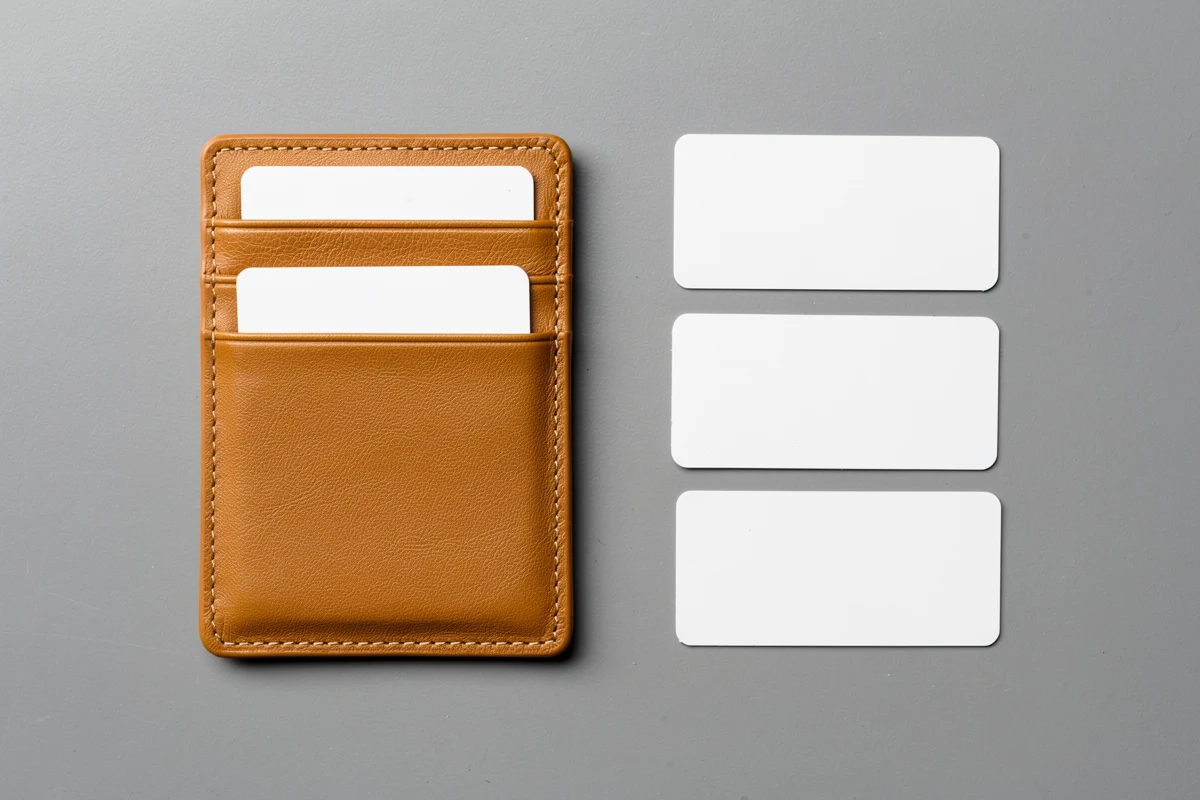
For a multi-pocket design, name the positions in a simple sketch: front upper pocket, front lower pocket, reverse pocket or center compartment, as applicable. Assign a card or task to each. This makes the inquiry clearer than “three-card holder” alone.
Place the most frequently retrieved card where users can reach it conveniently, then check that suggestion with a physical sample. The position that looks easiest in a drawing may not be easiest once the neighboring pockets are loaded.
Review whether the visible portions of cards provide enough distinction without exposing information the organization does not want continuously displayed. If users cannot identify the correct card, consider a simpler layout or a different carrying arrangement rather than assuming additional slots solve the problem.
For an employee badge, keep the display task separate from storage. A second pocket should not silently approve covering the name, photograph or required category on the front card. Use the actual dummy layouts during the sample review.
Compare the loaded profile and carrying method
Review both candidates empty and at their normal load. The empty sample helps explain construction; the loaded sample shows the condition that matters during use. Do not compare an empty single sleeve with a fully loaded wallet and attribute the entire difference to the pocket design.
Try the holder in the intended pocket, bag compartment or wearing arrangement. Check whether the opening remains accessible and whether users need to remove the whole holder to retrieve a card. For a lanyard or reel set, review the complete loaded assembly and confirm that the proposed accessory is appropriate for it.
When bulk is important, agree how it will be assessed. If dimensions are to become acceptance criteria, define the load and measurement locations with the supplier. Do not add an arbitrary universal thickness limit that has not been reviewed for the construction.
A useful decision can be as simple as: choose the single sleeve for the dedicated badge task, and use a separate wallet for unrelated cards. A multi-pocket holder is worth choosing when keeping those cards together has a clear benefit and the sample supports it.
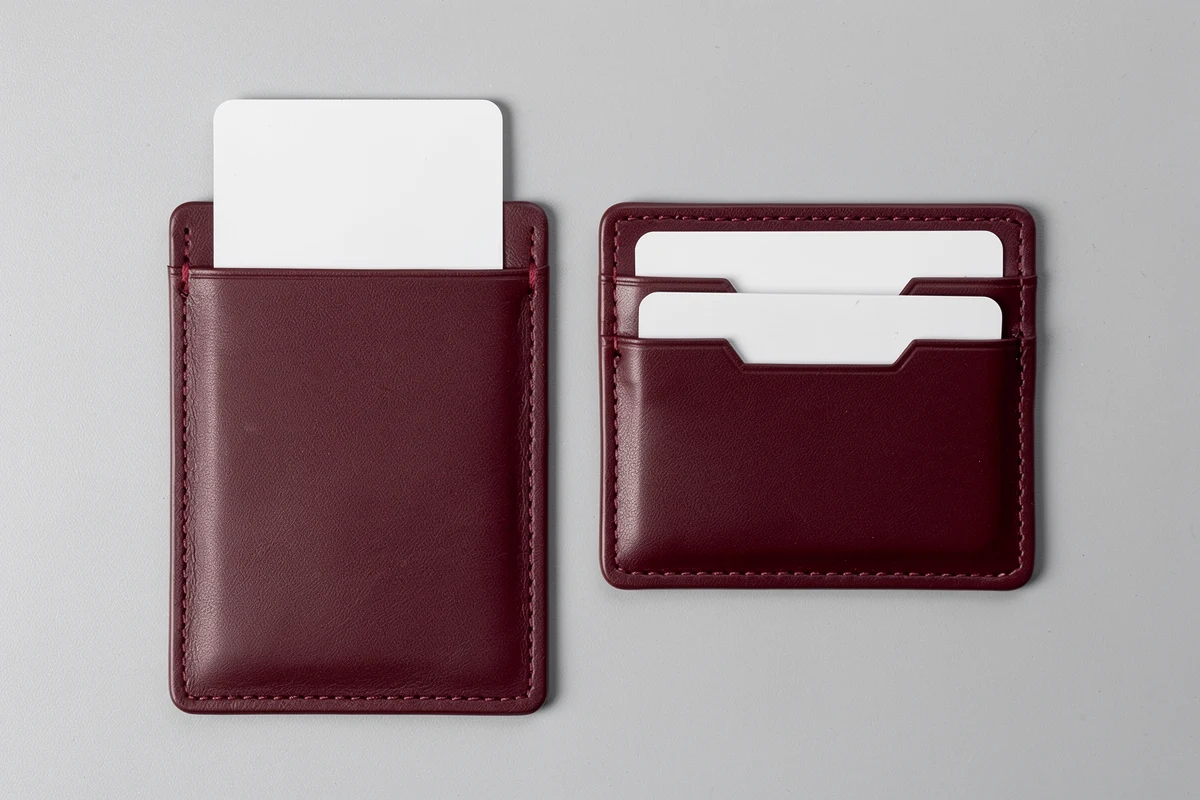
Test access with every pocket occupied as intended
Use a repeatable handling sequence before approving the layout:
- Insert the agreed cards into their assigned positions.
- Retrieve the most frequently used card without emptying unrelated pockets.
- Return it fully to its position.
- Repeat for the other cards and note any confusion or interference.
- Check that the remaining cards stay seated during ordinary handling.
- Record the sample revision, load and observations.
Do not stretch, heat or otherwise modify a sample to make it pass this review. If the fit or access is unsuitable, describe the issue and ask for a revised proposal. The sample should represent the construction being approved.
Electronic reading needs its own check. Separate pockets do not by themselves guarantee that a reader will select the intended card. If users need contactless access while cards remain inserted, evaluate the actual card combination and reader with the system owner. Do not infer compatibility or shielding from the pocket count.
Turn the chosen layout into an order brief
Once the comparison is complete, specify the approved use rather than a vague capacity headline. Include the card inventory, assigned pockets, normal load, occasional-load requirement, carrying method and sample reference.
Ask the quotation to reflect that same layout. If a supplier proposes an alternative with fewer layers, another pocket arrangement or a different opening, compare it as a distinct option. Do not approve it merely because both descriptions use the same total card count.
Keep one unresolved issue from becoming an implied approval of everything else. For example, “pocket arrangement accepted; loaded thickness still under review” is clearer than a general message saying the sample looks good. Close the outstanding points before accepting the construction for the order.
FAQ
Is a multi-pocket card holder always better than a single sleeve?
No. A single sleeve may be suitable for one dedicated card, while separate pockets can help organize several cards. Choose according to the normal load, retrieval routine and acceptable loaded bulk, then check the proposed sample.
Does one pocket mean capacity for only one card?
Not necessarily, but additional capacity should not be assumed. Ask what load the pocket is intended to hold and evaluate that load for insertion, retrieval and retention before approving it.
How should I compare the thickness of two designs?
Compare them with their intended loads and carrying methods clearly identified. If thickness becomes an acceptance criterion, agree on the load and measurement locations with the supplier rather than comparing undefined empty and loaded samples.
Can separate pockets prevent contactless reading problems?
Pocket separation alone does not guarantee reader compatibility or selection of the intended card. Test the actual card combination, positions and reader if cards must work while inserted.
What information belongs in a card-capacity inquiry?
Provide the card dimensions and thickness, normal and occasional loads, proposed pocket assignments, retrieval frequency and carrying method. Include any display or reading requirements separately and identify the sample checks needed for approval.
To discuss a suitable pocket layout, contact Xinchao with your card inventory, intended use and order quantity.