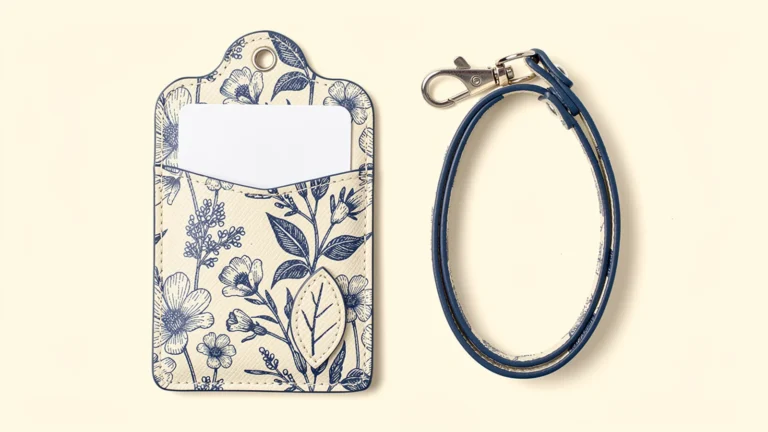

Images are AI-generated concepts, not verified Xinchao product or packaging specifications.
If a leather card holder is too tight, check the actual card, intended capacity and usable pocket before trying to stretch it. Remove any extra cards or sleeves and compare the remaining card with the product specification. Stop if insertion requires bending the card or visibly distorting the holder. A fit problem may need a construction change, not a break-in routine.
For a custom order, the useful question is where the interference occurs and whether the sample matches the approved requirement. This guide gives buyers a non-destructive way to document the problem and request a targeted review. It does not promise that every leather or leather-look holder will loosen with use.
Start with the card the holder was designed to carry
Confirm the card's width, height and thickness using an appropriate measuring method. Include any laminate, protective sleeve or attached feature used in the real application. Do not rely only on a name such as “standard ID” or “business card.” The supplier needs the dimensions of the item that will actually go inside.
Check the intended number of cards per pocket. A holder with several separate slots may not be designed to carry several cards stacked in one slot. Likewise, space intended for a thin insert should not automatically be counted as an additional card pocket.
Use an undamaged representative card for the first comparison. If it carries private information, cover that information in photographs or use an equivalent blank reference. A bent corner or a different sleeve can change the handling observation, so record the test condition rather than attributing every difficulty to the holder.
If one card fits but the complete intended set does not, retain both observations. They help distinguish basic single-card clearance from a capacity or stacked-thickness question.
Locate the resistance before suggesting a fix
| Observation | What to inspect | Useful information for the supplier |
|---|---|---|
| Card will not enter the opening | Pocket mouth, closure position and card orientation | Photograph of the empty opening and the card beside it |
| Card enters but stops partway | Usable depth, lining and internal obstructions | Where it stops, without forcing it farther |
| Card sits inside but is difficult to remove | Access notch, exposed card edge and extraction path | Short video of normal removal with private details hidden |
| One card works but the intended stack does not | Card count and total loaded thickness | Dimensions and number of cards in each pocket |
| Only some holders show the problem | Differences between samples or units | Unit identifiers and the same-card comparison |
These observations are starting points, not a diagnosis from appearance alone. A supplier may need the physical sample to establish the cause. Keep the original condition intact until that review is agreed.
Compare usable pocket space, not just outside dimensions
The outer width and height describe the finished outline. They do not tell you how much room remains inside after seams, folds, lining and closures are included. Two holders with similar outlines can provide different insertion paths and usable space.
Ask for a drawing that distinguishes outside dimensions, pocket opening and usable depth. If a window is present, identify its visible area separately. A card can fit in the pocket while important information remains covered, so visibility and fit need their own checks.
Inspect the opening under ordinary light without prying it apart. Look for an inward fold, displaced lining or an obvious obstruction. Photograph what you can see; do not cut a seam or pull apart bonded layers to investigate a sample that may need to be returned.
For a new design, ask the supplier how it proposes to achieve the required clearance with the selected material and construction. Do not add an arbitrary number of millimeters to the outside dimensions and assume the pocket problem is solved. The location of the interference matters.

Distinguish a snug fit from an unusable fit
A card holder needs to retain its intended contents while allowing the required handling. “Snug” is therefore not a complete acceptance criterion. Describe the task: insert one card, remove it regularly, leave it in place for visual display, or access a second card in another pocket.
Observe that task using the intended load. Can the user reach an exposed edge or access notch? Does a closure need to be opened first? Is the card being inserted from the correct side? Record these conditions before asking for a looser pocket.
Do not accept a design solely because one person can force the card inside. Conversely, do not enlarge the opening solely because a new sample feels firmer than a well-used personal wallet. Compare against the agreed use requirement and a suitable reference sample.
If your project needs a quantified insertion or removal requirement, agree the test method and acceptance limits with the supplier. This article does not set a universal force threshold, clearance allowance or break-in period.
Avoid using stretching as an unapproved repair
Do not pack extra cards into the holder, soak it, heat it or apply a treatment simply to make a sample pass. Ask the maker for instructions specific to its material, lining and finish before attempting any modification. A generic leather-care suggestion is not an approval for a coated synthetic material or a decorated assembly.
For a bulk procurement project, retain an unchanged sample that shows the issue. Altering the pocket before investigation makes it harder to compare the delivered construction with the drawing and approval record.
If the supplier describes the initial fit as intentional, ask it to explain the expected handling and provide relevant product-specific guidance. “It will loosen” should not replace evidence that the item can perform the required task when supplied.
Where the card is trapped or either item is at risk of damage, stop forcing it and contact the supplier. Use another holder for essential credentials while the issue is reviewed rather than continuing an improvised fit experiment.
Check whether the issue belongs to one unit or the design
When several units are available, compare them using the same reference card and the same insertion direction. Keep their identifiers separate. If one behaves differently, report that difference without assuming the whole production run is defective.
If all available samples behave similarly, compare their construction and intended capacity with the specification. That pattern may justify a design review, but the cause still needs confirmation. A few samples do not establish the condition of every unit in a shipment.
For delivered stock, retain the affected examples and agree the inspection or handling plan with the supplier. Do not silently modify stock before responsibilities and corrective action are clear. This guide is a troubleshooting aid, not a statistical shipment-acceptance plan.
When comparing an earlier approved sample with a new one, use the same card in both and record the sample condition. A heavily used reference may no longer represent its original fit, so preserve an unused approved reference for future comparisons where practical.

Request a specific revision and repeat the relevant checks
Send a concise issue record with the holder reference, card dimensions, load and observation. Ask the supplier to identify the suspected cause and proposed correction. A wider pocket, changed seam position or revised access feature should be reviewed through an updated drawing or sample, not accepted as an undocumented verbal change.
After a revision, check more than insertion. Confirm card removal, retention, visible information and closure operation as applicable. A change that makes removal easier can also alter another part of the user experience, which is why the assembled product needs to be reviewed again.
For the wider approval process, use our leather card holder sample checklist. The leather card holder overview can help define the intended product configuration before a replacement sample is requested.
FAQ
Will a tight leather card holder always loosen with use?
No universal result should be assumed. Ask for guidance specific to the material and construction, and confirm that the supplied holder can perform the intended task without forcing or damaging the card.
Should I put extra cards inside to stretch the pocket?
Do not use overfilling as an unapproved repair. Check the stated capacity and contact the supplier before modifying the holder, especially when the sample is being used to approve a bulk order.
Why does one card fit but two do not?
The pocket may not be specified for the combined thickness or card count. Record the actual dimensions and intended load, then ask the supplier to confirm the capacity of that particular pocket.
Does a larger outside size guarantee easier insertion?
No. Seams, folds, lining and the opening determine the usable space and insertion path. Review the pocket construction rather than relying on the holder's outside dimensions alone.
What should I send the supplier when reporting a fit problem?
Provide the holder and sample references, actual card dimensions, card count, insertion direction and where resistance occurs. Include clear photographs or a short handling video with personal information hidden, and keep an unchanged sample for review.
To review a custom fit requirement, send Xinchao the card dimensions, intended capacity and sample observations.