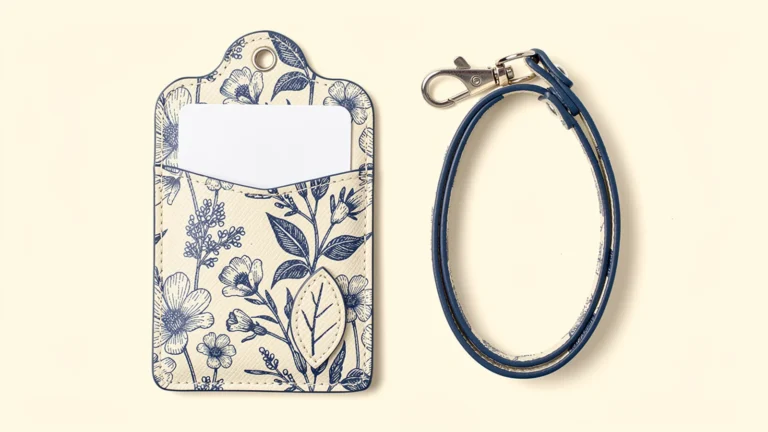
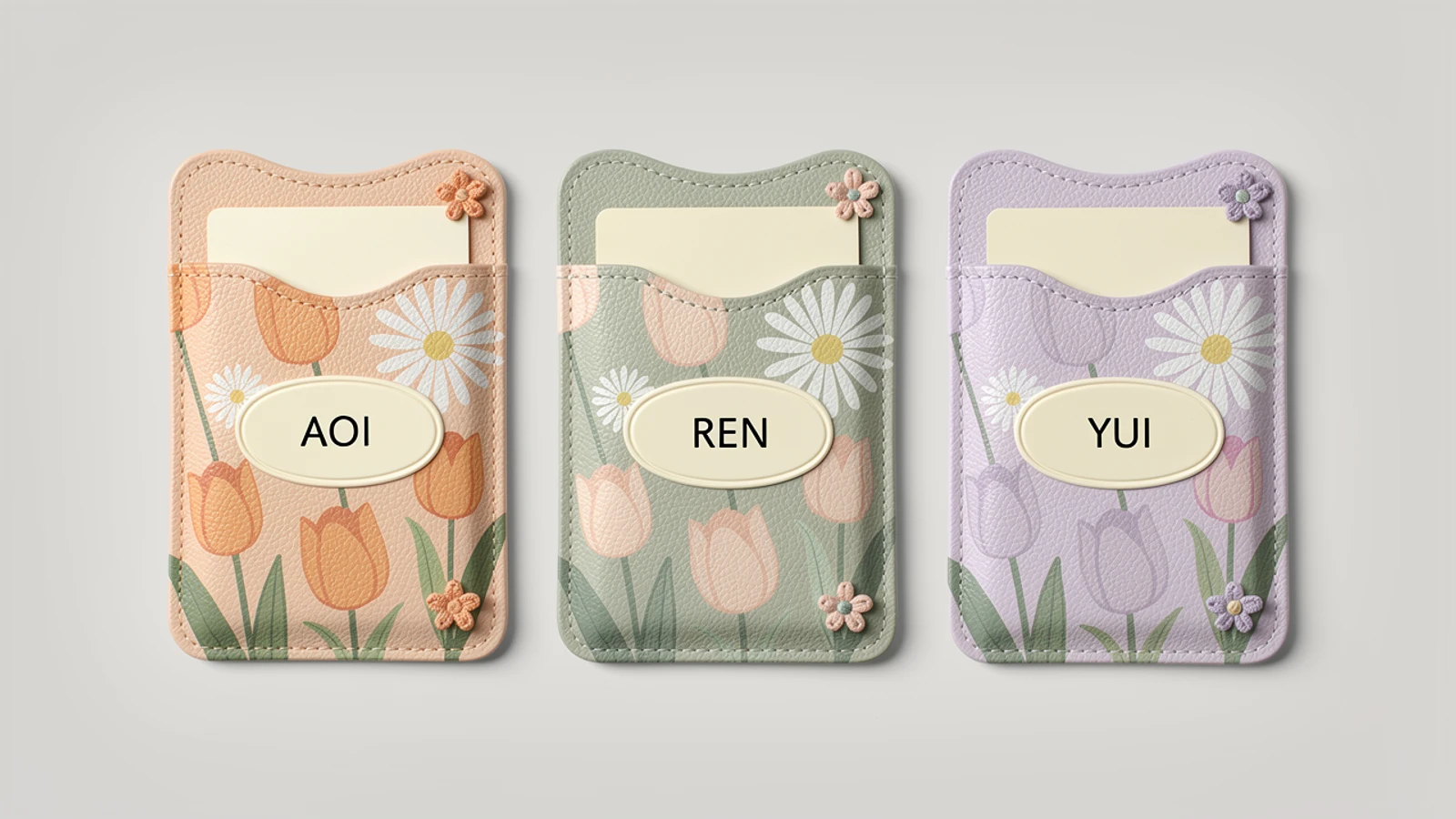
Images are AI-generated design concepts, not production photographs, measured samples or approved Xinchao specifications. PU denotes synthetic leather, not genuine leather. Names are fictional examples.
For name-personalized pass cases, approve the exact text and its product assignment as carefully as the printed illustration. A correct-looking sample does not verify every name in a bulk order. Separate the shared artwork from the variable name field, then connect each approved record to its layout, case variation and packing reference.
This is especially useful when a Japanese-market gift project combines a common floral or character-free original design with individual names. The goal is a repeatable approval process, not an assumption that every printing method, font or supplier supports the same characters and quantities.
Separate shared artwork from individual text
Identify what stays the same across the order: the illustration, material, outer shape, pocket layout and any common wording. Then identify what varies: the displayed name, initials, color choice or another expressly approved field. A common organization name printed on every case is a different task from a separate recipient name on each one.
Ask whether the proposed process supports the required variation and how it affects proofing, quantities and pricing. Do not assume that a quotation for one repeated logo includes a different name on every unit. Confirm any setup or revision conditions before submitting final artwork.
Japanese maker fleur publishes product-specific rules for supported lettering, symbols and approximate name length on a leather pass case. That is a useful reminder that personalization rules depend on the product and process. Its lettering limits are not a universal rule for printed PU or Xinchao projects.
Collect the approved display text, not a guessed spelling
Request the exact text to be printed. Do not automatically convert a Japanese name into Roman letters, change character variants or replace a recipient's preferred spelling. Kana, kanji and Roman-letter versions should be treated as distinct approved choices rather than interchangeable forms.
Record spaces, capitalization, punctuation and name order. If only initials are wanted, confirm them explicitly. Where a character cannot be represented by the chosen font or process, return it for a decision rather than silently substituting something that looks similar.
Use a unique internal order reference for each item. Two recipients may have identical display names, so the printed name alone is not a reliable packing identifier. Request only information needed to make and match the items; a production list need not contain unrelated recipient details.
Use one controlled name list
A single approved list helps prevent changes from being scattered across messages, images and old files. The format can be simple, but the meaning of each field should be clear. The following is a suggested production-brief structure, not a requirement to send personal information in public channels.
| Field | Purpose | Approval check |
|---|---|---|
| Item reference | Distinguishes each ordered item | Unique even when names repeat |
| Exact display text | Defines what appears on the case | Spelling, characters, spaces and capitalization approved |
| Case variation | Connects text to color or shared artwork | Matches the intended product version |
| Layout reference | Identifies the approved placement | Font, size and position are traceable |
| Quantity | Allows repeated names where intentional | Duplicate rows are not mistaken for accidental copies |
| Packing reference | Connects the finished item to its package | Can be checked without relying on name alone |
Set a revision identifier and one person responsible for approving the list. If the list changes, identify the affected item references and issue a new approved version. Do not let an old spelling remain in a print file while the packing list uses a corrected version.
Design for the longest and most complex names
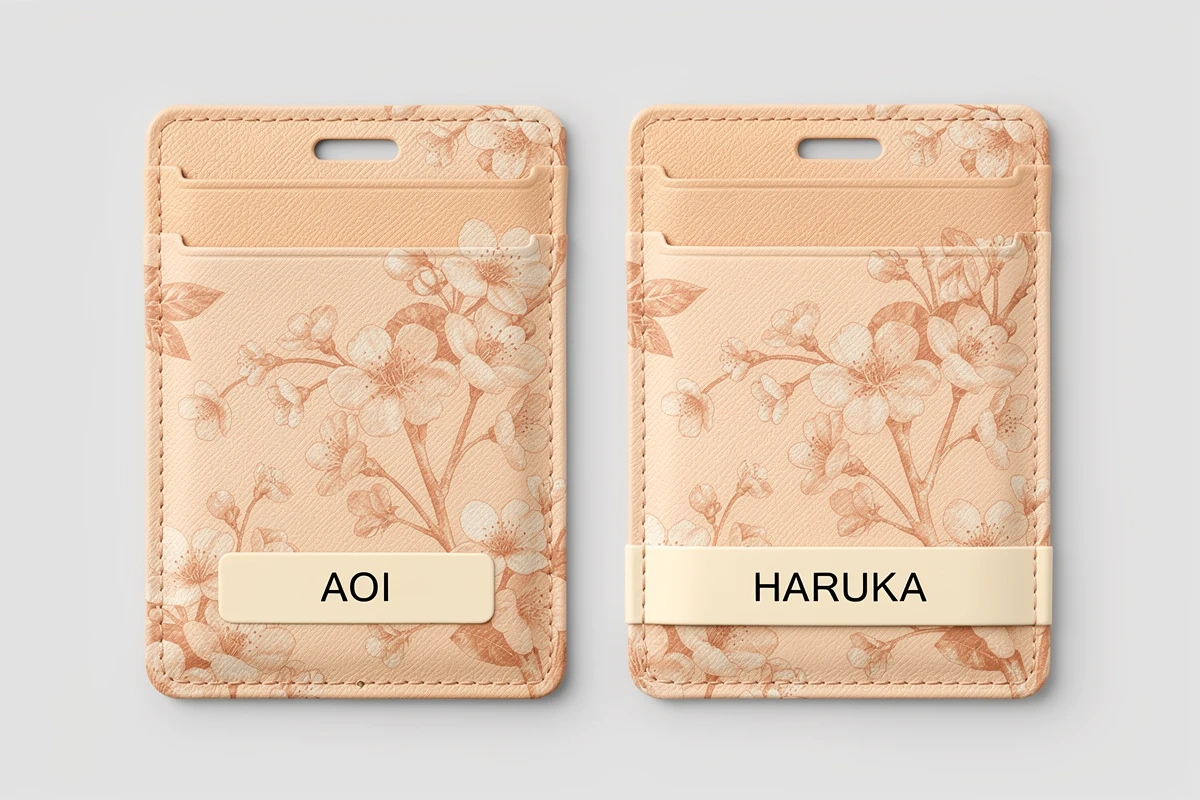
Reserve a quiet area within the print design so names do not compete with detailed artwork. Check short and long entries at actual size. A long name squeezed to fit can become difficult to read; changing the font size independently for every item can also create an inconsistent range.
Agree on a rule for overflow: for example, a wider approved field or a separately approved layout. Do not truncate, abbreviate or remove characters without permission. If several writing systems are used, request proofs that include the actual required characters, not just a convenient Latin sample.
Keep the name away from seams, window edges, hardware and portions hidden by a pocket or flap. A common name field should remain visible with the intended cards inserted. If names are placed on the reverse, use the double-sided artwork guide to confirm the face and reading direction.
Keep decorative layers outside the name field
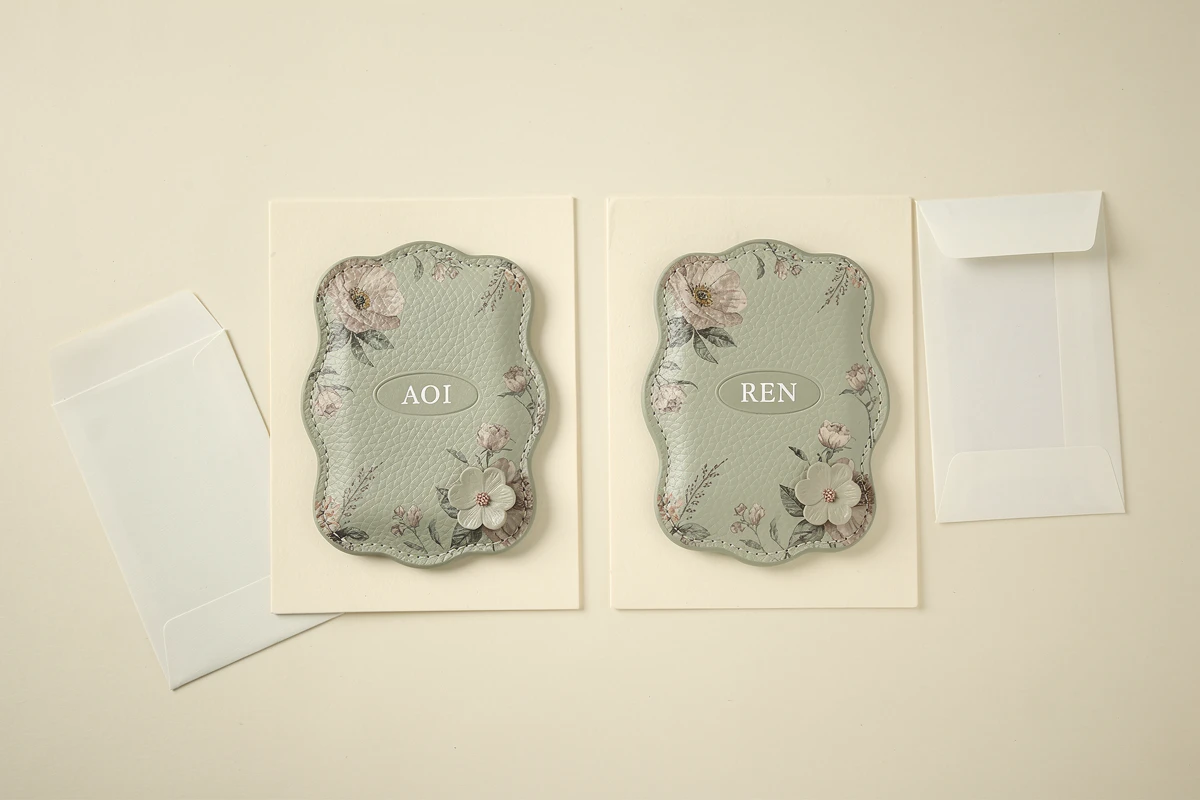
Full-color print can provide the shared illustration while a thin separate flower or other original motif gives a physical accent. An irregular outer contour can complement the artwork. Neither should shrink the usable name field or become the part users must pull to access their cards.
Specify the name position independently from the decorative component. A layered piece may cover text in an assembled view even if the flat artwork looks clear. Review the case with its intended inserts, and distinguish the independent pocket count from card capacity; one or two pockets may suit a simple gift, while other projects may need three to five.
PU is synthetic leather, not genuine leather. The examples here are AI design concepts with fictional sample names, not actual customer records or approved text proofs. Generated lettering must not be copied directly into production without checking the real artwork and approved name list.
Approve a master design and the variable records
The master sample can establish material appearance, printing, shared artwork and construction. It cannot establish that all personalized records are correct. Agree on how the variable text will be proofed and approved separately, including difficult characters and the longest entries.
For a manageable order, reviewing a proof for each distinct record may be practical. For a larger order, define a process that still checks every record's exact text and assignment; a few attractive samples do not validate the whole list. The buyer and supplier should agree who verifies text, who approves layout and what happens after a correction.
Freeze the approved list and layouts before production release. If a later change is needed, ask whether production has started and what can still be changed. Do not assume that updating a spreadsheet automatically changes files or items already produced.
Match the finished item to its package
Keep the item reference connected to the product variation and package during the agreed checking process. Inspect the displayed text, case color or design, quantity and package reference together. Avoid putting a correctly printed name into the wrong recipient's package simply because the shared artwork looks identical.
Use non-sensitive reference codes on working labels where practical. Decide which identifiers belong on the product, which belong on packaging and which are only internal. If a replacement is needed, record the exact affected item and revision instead of resending an unmarked full list.
The Xinchao leather card holder page is the starting point for discussing material, print and shape. Individually variable names, supported scripts, proofing arrangements and packing services need project-specific confirmation. This guide does not promise that every technique or order size is supported.
FAQ
Is one shared logo the same as a different name on every case?
No. Individual names introduce variable text and item-matching requirements. Confirm that the quotation and production process include those requirements rather than assuming they are covered by repeated-logo printing.
Should Japanese names be converted automatically into Roman letters?
No. Ask for the exact approved display text, including spelling, name order and capitalization. Do not guess a reading or substitute character variants without approval.
Does an approved master sample confirm every personalized name?
No. It can approve the shared design and construction, but the variable records and their product assignments require separate checks under an agreed proofing process.
What happens if a name is too long for the design?
Use an agreed alternative layout or obtain a new approval. Do not silently shorten the name, remove characters or reduce it to an unreadable size.
How can identical display names be kept separate during packing?
Give each ordered item a unique internal reference and connect it to the case variation, quantity and packing reference. Do not use the printed name as the only identifier.
To discuss name-personalized pass cases, send Xinchao the shared artwork and an anonymized example of the required name-list format before exchanging the final approved production records through an agreed channel.