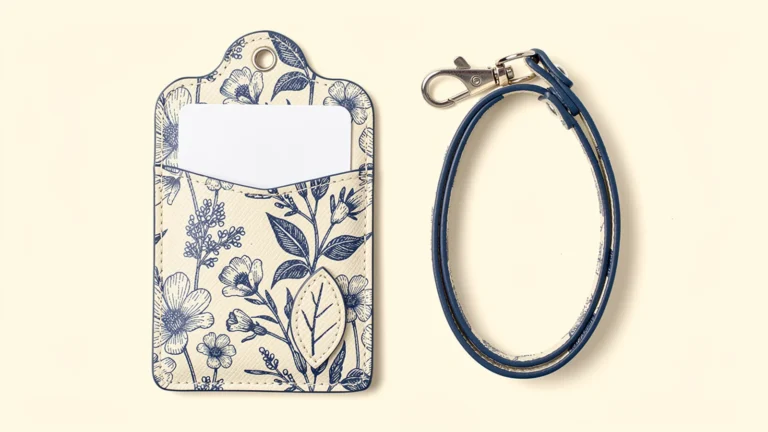
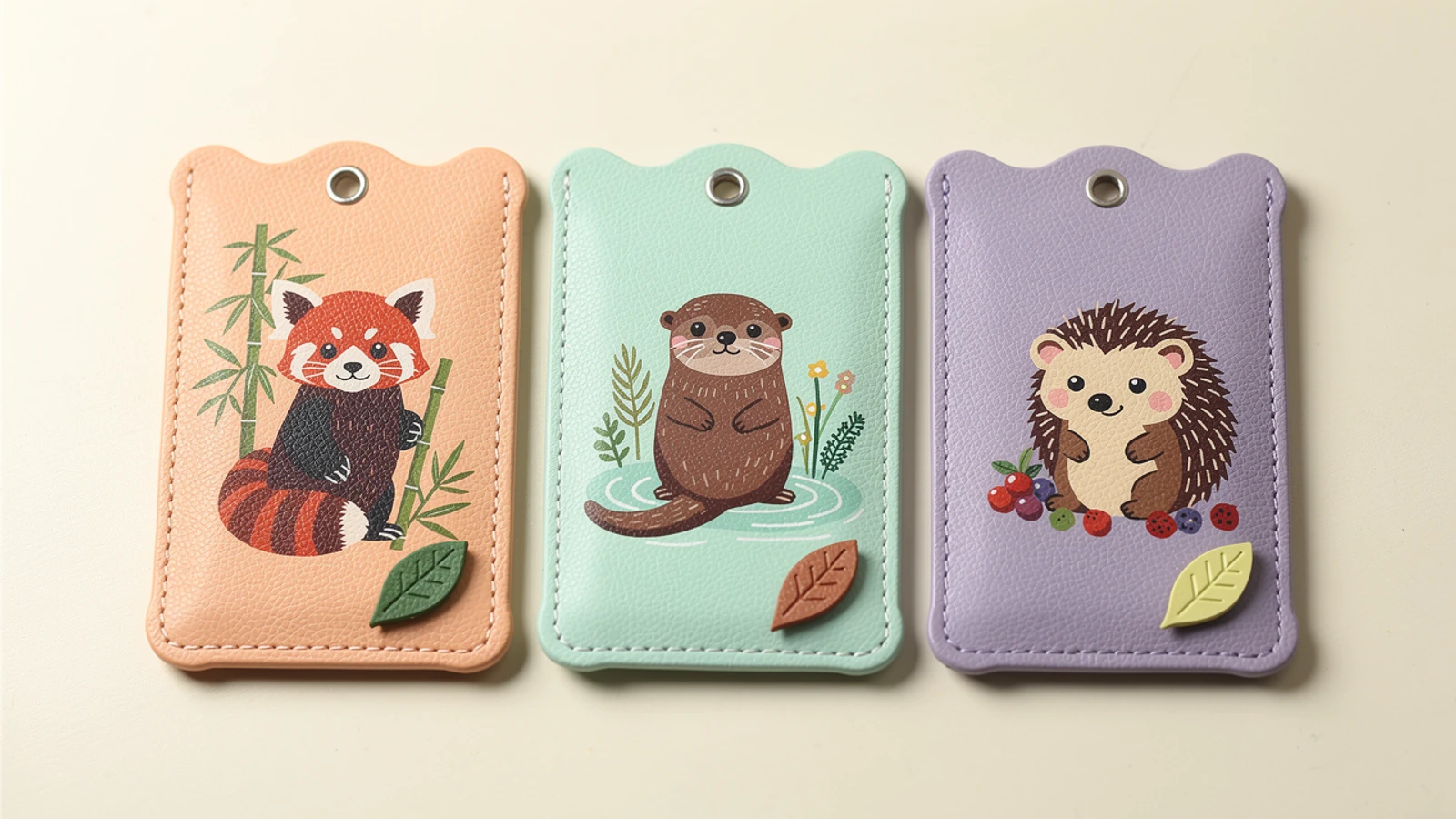
Images are AI-generated design concepts, not production photographs or approved Xinchao specifications. PU denotes synthetic leather, not genuine leather.
For a small-batch custom pass case order, define the quantity of each design before asking for a price. A collection with one shared body and several printed illustrations is different from a collection in which every design changes the shape, material and pocket construction. Both can be proposed, but they should not be treated as the same production brief.
This matters for Japanese-market character goods, museum-shop collections and event merchandise. Buyers may want a varied display without committing to a large quantity of every design. The practical starting point is a clear variant list: what stays common, what changes, how many of each version are required, and what must be approved before production.
This guide addresses that multi-design planning task. It does not promise a universal minimum order quantity, combine different designs into a single price tier, or set a Xinchao delivery time before the specification has been reviewed.
Small batch is not a complete specification
Japanese suppliers offer small-lot pass case services, but the basis of the offer matters. For example, Taihei Kasei describes a printable PU pass case using stocked white material. This is a useful reminder to ask which existing materials or structures support an offer. It is not evidence that a new silhouette, different material or added pocket has the same ordering conditions.
Ask whether the minimum applies per artwork, per body color, per construction, per accessory or to the complete order. A supplier may need to review several of those boundaries separately. “Three designs in one order” does not by itself mean the quantities can be combined for every production step.
Also separate a development sample from a saleable production batch. One printed sample may answer a design question without establishing the cost or process for the intended order. Record what the sample is meant to approve and which parts of the specification it represents.
Separate artwork variants from construction variants
An artwork variant changes the printed image while keeping a confirmed body specification. A construction variant changes something physical: the cut outline, independent pocket count, window, material, attachment point or separate decorative component. A single product can include both kinds of change.
For a first collection, consider keeping the body, material, pocket layout and hardware common while changing the illustrations. That makes the differences easier to communicate and compare. It is a planning option, not a guarantee of a lower price or a particular minimum quantity.
| Proposed change | How to describe it | What to ask before combining quantities |
|---|---|---|
| Different printed animal on the same body | Separate artwork, shared construction | Does each artwork have its own minimum and proof requirement? |
| Different base material color | Material/color variant | Is it stocked, and are procurement conditions different? |
| Different die-cut outer silhouette | Construction variant | Does it require a new pattern, cutting setup or fit sample? |
| One pocket changed to two pockets | Storage construction variant | Are panel sizes, assembly and loaded thickness different? |
| A separate raised printed panel | Added component | Does its shape or attachment change for every design? |
| A different strap or backing card | Accessory or packaging variant | What is its own quantity, identification and packing requirement? |
A background color printed onto the same white PU is not necessarily the same change as replacing the underlying material with colored PU. Describe the intended result explicitly. PU is synthetic leather; if the project uses genuine leather, identify that material separately rather than carrying over the PU sample approval.
Make the quantity split visible
Instead of sending only a total, prepare a row for every saleable version. Use a stable code that appears on the artwork file, sample approval and packing list. The code need not appear on the visible product itself.
The following is an illustrative planning example, not a recommended order size or a confirmed MOQ:
| Variant | Printed design | Shared body | Planned quantity |
|---|---|---|---|
| A | Red panda and bamboo | Body S, two pockets | 40 |
| B | Otter and water plants | Body S, two pockets | 35 |
| C | Hedgehog and berries | Body S, two pockets | 25 |
| Total | Three artworks | One proposed construction | 100 |
Ask the supplier to confirm whether this split is acceptable and how it is priced. Do not infer the answer from the total of 100. If the quantities change later, request an updated confirmation rather than assuming the original quotation still applies.
Choose the split using your own sales history, preorders or merchandising plan where available. In the absence of those inputs, label the split as a planning assumption. Search interest in a product category does not predict how many units of a particular illustration will sell, and equal quantities are not automatically the lowest-risk choice.
Add shape and pocket variety deliberately
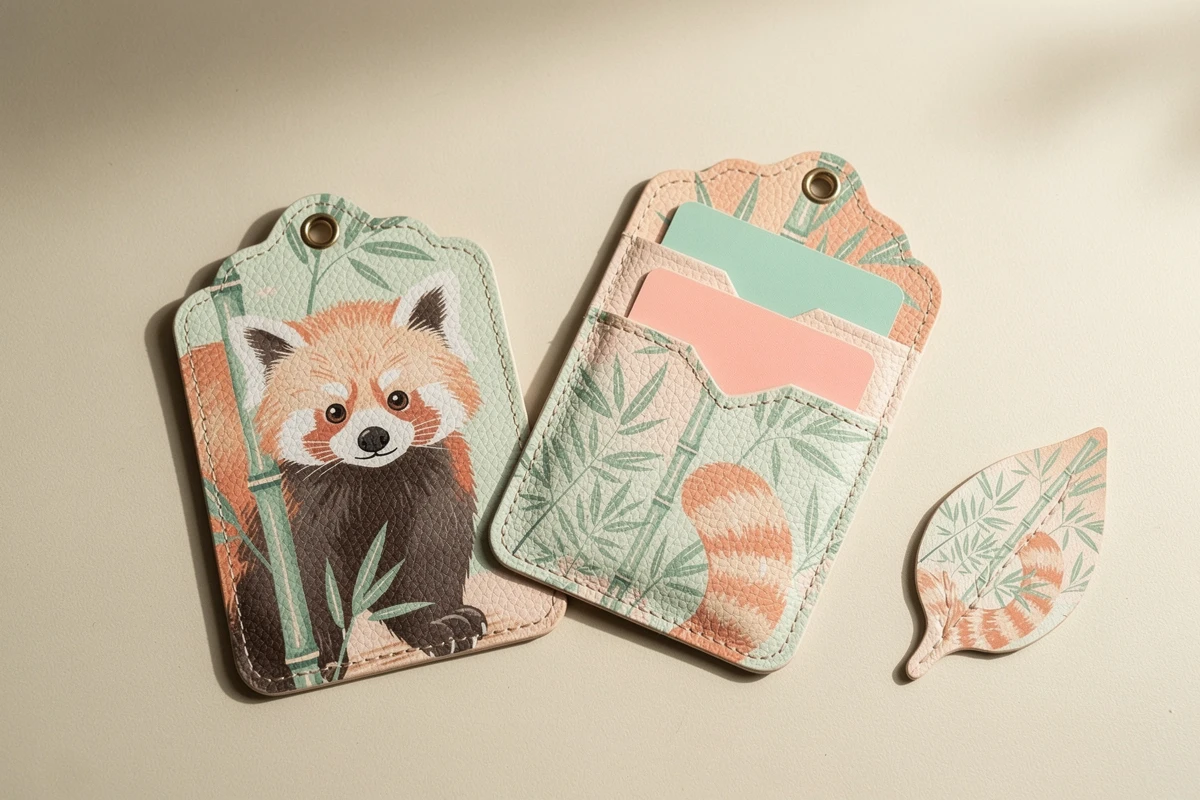
A coordinated collection does not have to be a set of plain rectangles. A shared scalloped outline can carry several full-color illustrations, or each design can propose its own irregular contour. The second approach introduces more variables, so show the functional card area inside every outline and identify which dimensions remain common.
One- and two-pocket layouts are useful starting points for many pass case concepts. Three to five independent pockets can also be discussed when the use case calls for them. Avoid changing pocket count only to make one illustration look different: the storage change should serve an actual carrying task. See our one- to five-pocket layout guide for the distinction between slots, faces and card capacity.
For a physical layered effect, list the decorative panel separately from the body. If every character has a different appliqué outline, record those as different parts even when the main body is shared. A printed shadow is not a separate layer, and a stitched decorative piece is not a pocket unless it creates usable storage. These distinctions keep the quotation and approval documents aligned with the product concept.
If simplifying the first batch, one option is to retain the same outline and pocket construction across the range while varying the full-color print. You can still create a recognizable collection through original motifs and color. If distinctive silhouettes are central to the concept, keep them—but ask for their development and sample requirements explicitly.
Approve the shared body and each artwork separately
A common construction sample can help confirm card fit, access and attachment, but it does not approve every artwork. Each design still needs a checked file revision and a clear record of the accepted printed appearance. Ask whether the approval plan includes digital proofs, physical printed samples or both, and what each one is intended to establish.
For the shared body, record the material, pocket count, card dimensions and thickness, cut outline, window and strap attachment. Test the intended loaded condition as well as a lighter load. If one variant changes those features, it should not automatically inherit the same structural approval.
For each artwork, check the front/back pairing, orientation, crop, important facial details, small lettering and areas hidden by pocket lips or cards. Compare the print on the actual chosen surface where physical appearance is important. A screen proof alone does not establish the final color or texture.
Do not assume one approved illustration covers the rest because the colors look similar. Maintain a short approval register with the variant code, file revision, proof type, reviewer, approval date and outstanding corrections. When a file changes, state which previous approval it replaces.
Keep packing and repeat orders tied to the same codes
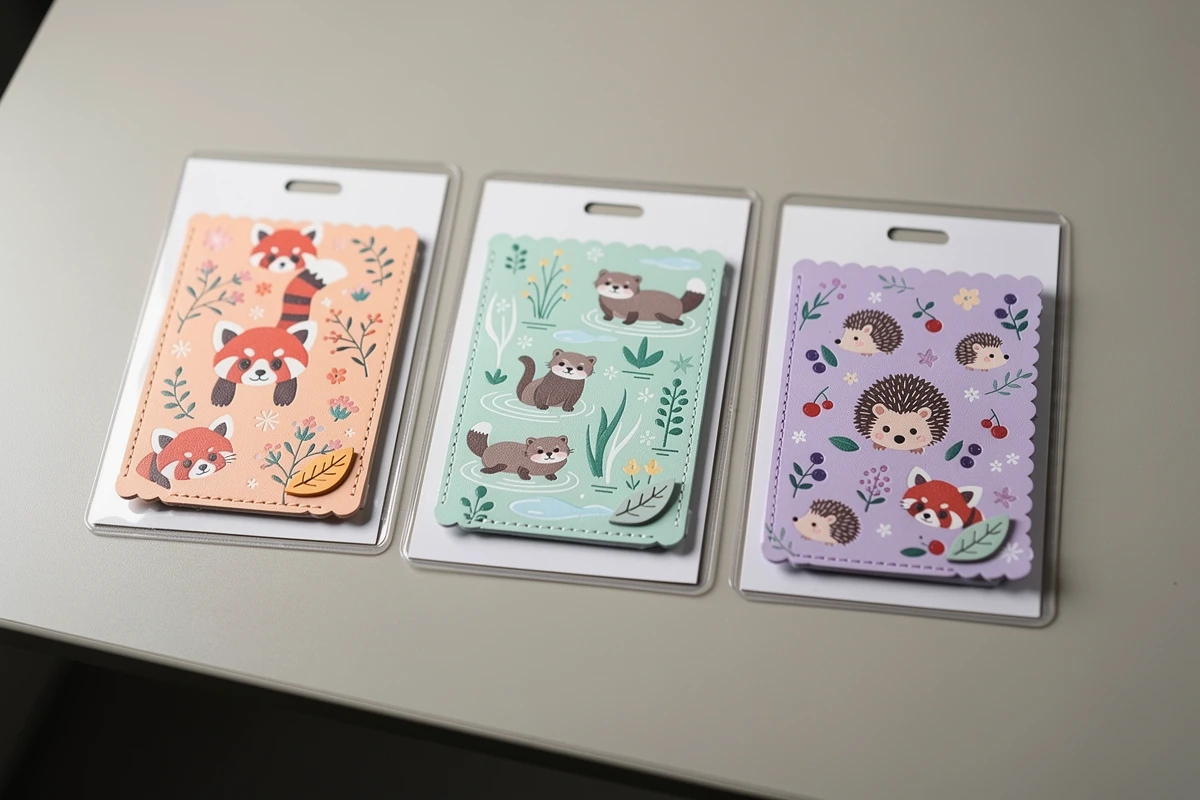
For a multi-design batch, specify whether units are packed by design, in fixed mixed sets or in another agreed assortment. “Mixed packing” is too vague if the buyer expects a particular number of each illustration in every carton. Define the unit pack, outer label and per-design count together.
If backing cards or labels differ, pair each one with its product code. Request a packing example or other agreed confirmation method before the full batch is packed. The objective is to avoid a correct printed product being placed with the wrong label or assortment.
Agree how quantity differences, damaged units or other exceptions will be reported and handled. Do not assume a fixed spare percentage, automatic replacement policy or permission to substitute one design for another. Those are order terms to confirm, not benefits implied by small-batch production.
Keep the accepted artwork and construction records for repeat orders. A reorder of only one design may have different conditions from the original mixed collection. Confirm material availability, quantity and sample requirements again, especially if the body, print process or accessory changes.
What to send with a small-batch inquiry
Use one concise brief containing the variant table, total and per-design quantities, material, pocket layout, finished-size proposal, printed sides, die-cut outlines, layered parts, accessories and packaging. Include your required arrival date and destination, and ask the supplier to separate development, approval, production and shipping stages rather than promising an unsupported end-to-end lead time.
For a Japanese-market collection, include the final Japanese text and who will approve it. Confirm that the artwork and any licensed assets are cleared for the intended use before production; original placeholder concepts should not be presented as approved licensed merchandise.
The Xinchao leather card holder page is a starting point for discussing the product direction. The useful question is not simply “Can you make a small quantity?” but “Which of these variants can share a construction, and what are the confirmed conditions for each?”
FAQ
Can different pass case designs be combined to meet a minimum order quantity?
Possibly, but it must be confirmed for the specific order. Ask whether the minimum applies per artwork, body color, construction, accessory or total order. A combined total alone does not establish eligibility for a quantity tier.
Is changing the printed design the same as changing the shape?
No. A new illustration can be an artwork variant on a shared body. A new cut outline is a construction change that may require a separate pattern, setup or sample review. Describe both changes separately.
Can a small-batch collection include two- to five-pocket versions?
Those layouts can be proposed, but different pocket counts should be identified as separate construction variants. Confirm their feasibility, quantity conditions, card fit and loaded thickness instead of assuming they share one specification.
Does one approved sample cover every design in the collection?
Not automatically. A shared body sample can address common construction features, while each artwork still needs its own approved revision and agreed proof process. Structural changes require separate review.
Is the example of 100 pieces a Xinchao minimum order quantity?
No. The quantities in this article are only an illustration of a multi-design planning table. Xinchao order conditions must be confirmed for the material, structure, artwork split, accessories and packaging requested.
To discuss a small-batch collection, send Xinchao your per-design quantity table and artwork concepts so the shared construction and individual variations can be reviewed together.