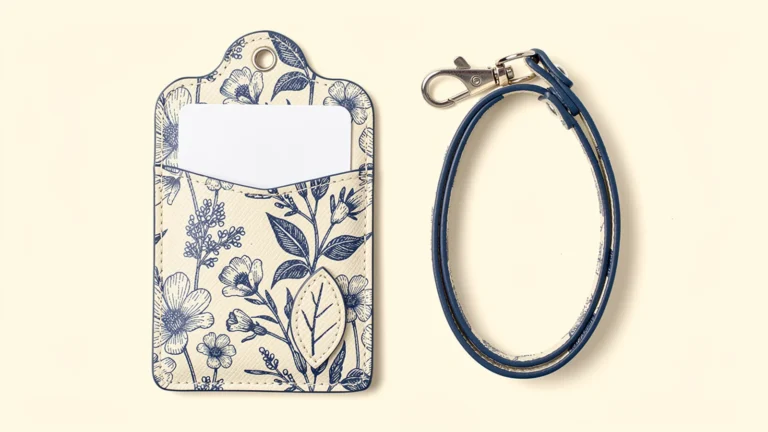
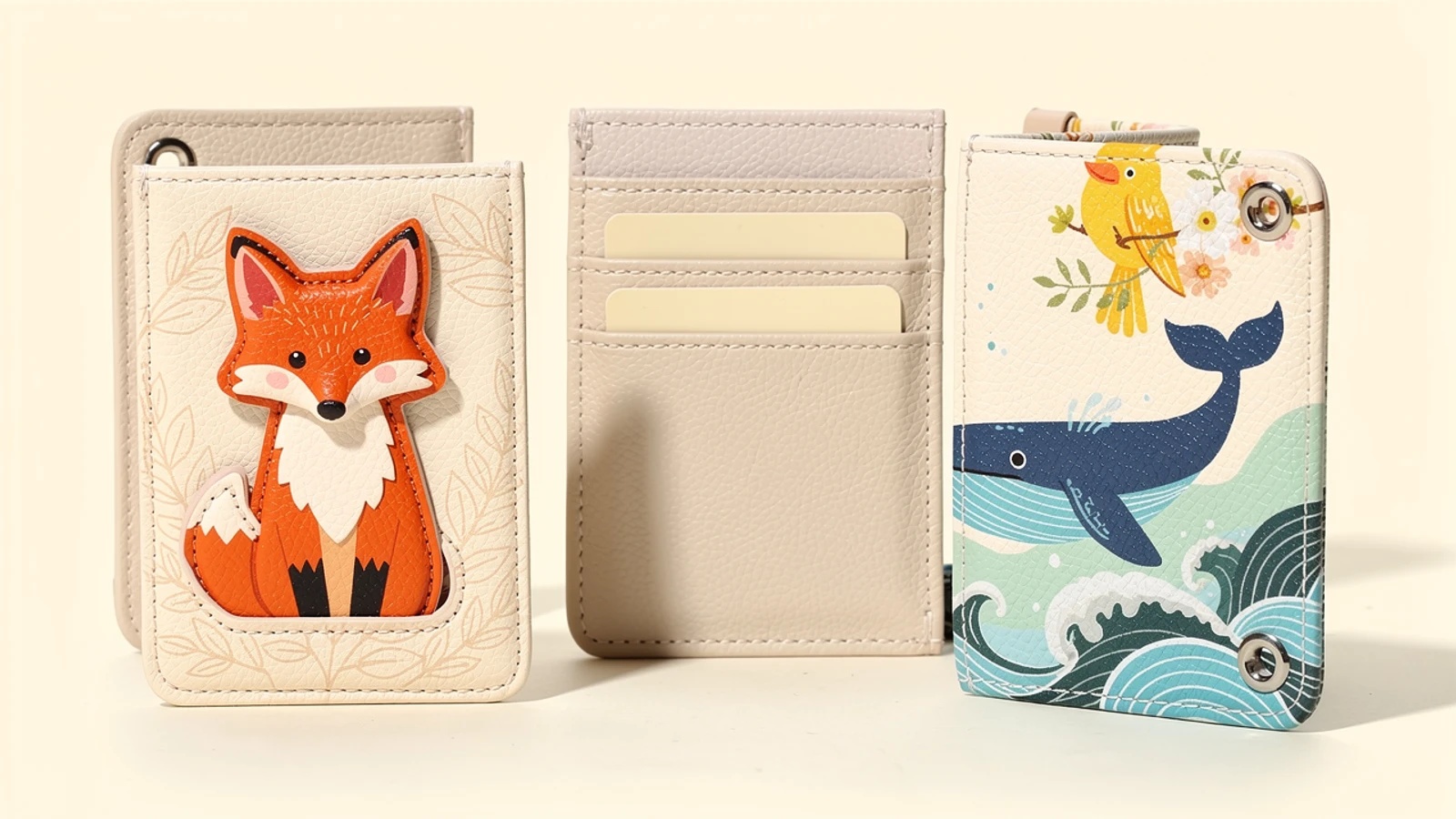
Images are AI-generated design concepts, not production photographs or approved Xinchao specifications. PU denotes synthetic leather, not genuine leather.
A custom printed pass case does not have to stop at one card slot. A one-pocket design can keep the artwork and everyday carry simple; two separate pockets can organize two different cards; three to five pockets can support a broader storage brief. The useful question is not just how many cards fit, but where each card sits, how it comes out, and what remains visible when the holder is loaded.
For Japanese-market merchandise, start by drawing the pocket layout alongside the printed front. Adding storage after the artwork is approved can introduce seams, card edges or extra thickness exactly where the illustration needs space. This guide focuses on that layout decision for printed leather card holders and PU pass cases, rather than treating extra pockets as an automatic upgrade.
What Japanese product examples actually show
One- and two-pocket formats are established options in Japanese printed merchandise. KEIO lists both a one-pocket printed PU pass case and a two-pocket version combining a clear pocket with an ordinary pocket. These examples support using one and two pockets as practical starting points—not a claim that they hold a measured share of the whole market.
More storage also exists. The official étonné Tarjetero page describes a slim five-pocket pass case. Such products demonstrate that the category is not limited to a single sleeve; their materials, construction and quoted specifications should not be transferred to a different custom product without sampling.
Japanese terms need careful reading. “2枚” describes two cards, “2面” describes two faces or panels, and “2ポケット” describes two pockets. A two-face holder can contain additional compartments. A pouch that accepts five cards together is not necessarily a five-slot holder. Use a numbered front-and-back drawing to make the intended specification unambiguous.
Define a slot before choosing the count
For an OEM brief, define a card slot as a separate card-receiving pocket with its own opening. Label each one P1, P2 and so on. Record its opening direction, whether it has a viewing window, and the intended card type. Count a central compartment separately only when it really is a distinct usable pocket.
Do not count a decorative stitched panel as storage. A thin printed animal or flower appliqué can create physical depth while being fully attached to the surface. If it has no functional opening, it adds a layer, not a card slot.
| Proposed pocket count | Example layout to discuss | Main design decision |
|---|---|---|
| 1 | Printed front and one rear card pocket | Preserve a continuous illustration and straightforward access |
| 2 | Rear staggered pockets, or a window pocket plus a separate hidden pocket | Decide which card must remain visible and accessible |
| 3 | Two external pockets and one distinct central compartment | Confirm separate access and loaded thickness |
| 4 | Two pockets on each side, or an opening format | Reserve artwork areas around multiple pocket lips |
| 5 | Two front pockets, two rear pockets and one central pocket | Check the complete loaded assembly, not just the empty shell |
These are planning layouts, not verified Xinchao stock models. Pocket count alone does not establish dimensions, maximum card capacity or manufacturing feasibility. Confirm those points against the actual card set and sample.
Design the two-pocket reverse before finishing the front
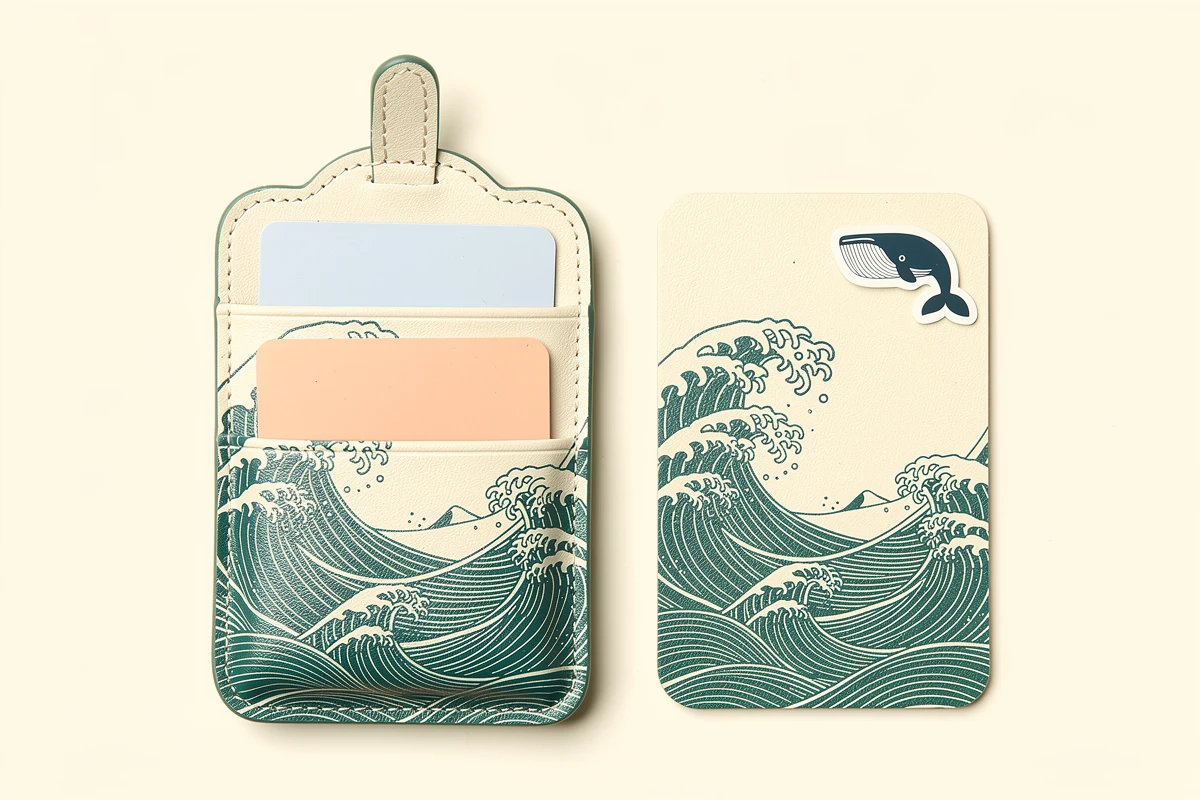
A two-pocket concept is a useful first sample when a buyer wants more organization without immediately moving to a folding wallet. There are two particularly clear ways to brief it.
With staggered rear pockets, the upper edge of each card should remain identifiable. Plan enough finger access to remove the intended card without pulling out its neighbor. Check whether the lower card hides a printed detail on the upper pocket lip. The front can remain a larger illustration field, but the added rear layers still affect how the whole holder bends and hangs.
With a window pocket and a separate concealed pocket, decide which information needs to be displayed. The visible ID area should not be blocked by a seam, a strap or a decorative extension. The concealed pocket needs its own clear opening; a window cut into one pocket does not create a second pocket by itself.
Evaluate both a partially loaded and a fully loaded sample. A holder designed around two cards must still retain one card when the other pocket is empty. Specify the actual card thicknesses rather than approving fit using an unrelated test card. Do not approve a loose pocket merely because the second card temporarily stiffens the assembly.
Protect the print area as pockets increase
Full-color print, irregular outlines and multiple pockets can coexist, but they need a shared drawing. Mark the cut line, stitch line, pocket openings, window, eyelet and decorative layers before placing critical artwork. Keep important facial details or small lettering away from seams and areas hidden by inserted cards.
For three to five pockets, consider whether both outside faces should become storage surfaces. A layout with two pockets on each side leaves less uninterrupted space than a full printed front. A folding arrangement can provide additional surfaces, but changes the opening action and the product's bulk. Neither solution is automatically preferable: choose around the intended carry and display task.
An irregular silhouette should extend around a functional card area, not replace it. Decorative ears, leaves or waves must not narrow the cavity or obstruct extraction. Ask for the drawing to show the card outline inside the proposed shape. Then check the assembled sample with its strap attached, because the attachment area can interfere with fingers or with an upper opening.
Separate physical decorative layers from pocket layers in the bill of materials. A thin printed appliqué may create an attractive raised edge, but it also needs its own attachment and edge-finish decision. It is not 3D printing, and a shadow printed onto a flat panel is not an additional physical layer. For the visual direction, see our guide to printed, die-cut and layered pass cases.
More storage does not guarantee contactless-card compatibility
Two slots can separate cards physically without making two contactless cards work reliably in the same holder. JR East's Suica guidance warns against keeping multiple contactless IC cards together in a pass case because they can prevent passage through a ticket gate.
Do not describe an ordinary multi-pocket product as automatically compatible with two transit cards. Follow the card operator's guidance and remove the intended card for use where required. If a project requires a specialized separation feature, define and validate that feature separately; pocket count, an ordinary lining and RFID-blocking claims are not substitutes for evidence.
Send a pocket map with the OEM inquiry
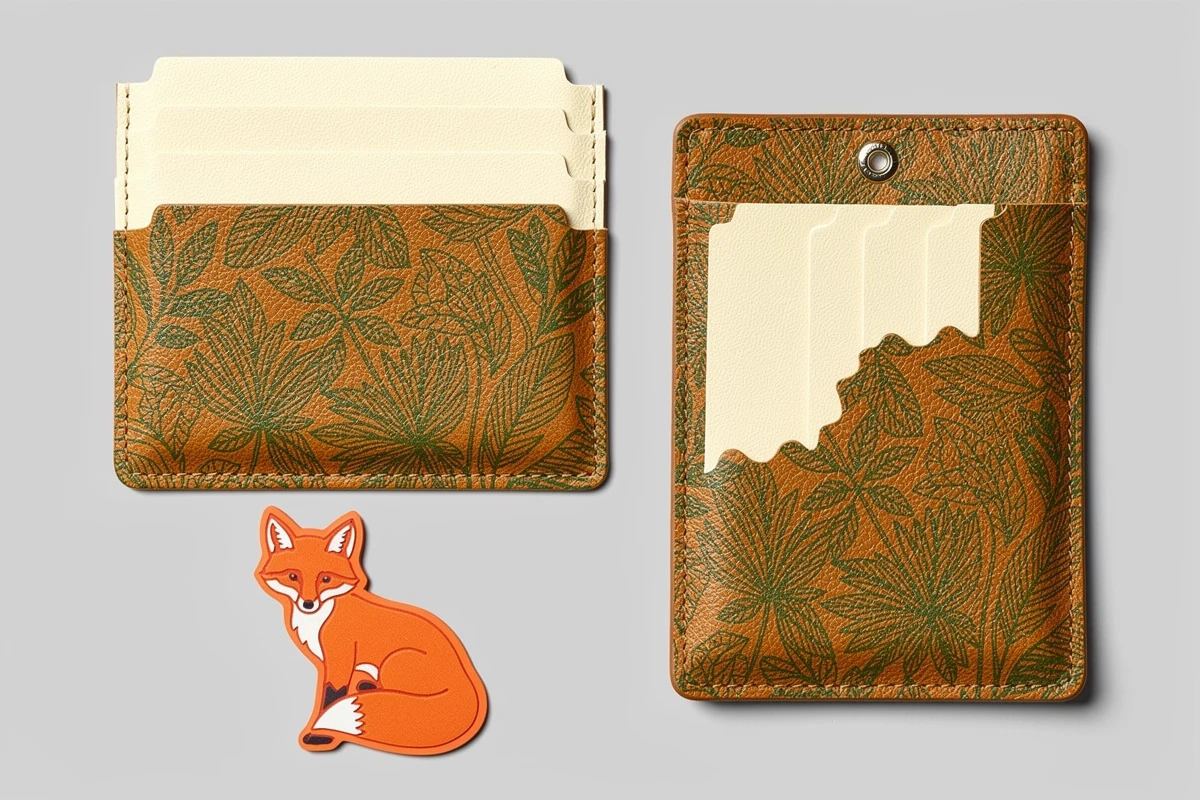
For a useful discussion with Xinchao, send a front view, rear view and loaded side-view concept together with the artwork. The leather card holder product page is a starting point for discussing the product direction; final materials and construction remain subject to confirmation.
Include these fields in the brief:
- Number of independent pockets and their P1–P5 labels.
- Intended card dimensions and thickness for each pocket; target cards per pocket.
- Which cards must be displayed, concealed or removed frequently.
- PU synthetic leather or specified genuine leather, with lining and window requirements listed separately.
- Print coverage, front/back artwork orientation and critical details to protect.
- Irregular cut outline and separate decorative appliqué pieces.
- Strap attachment, packaging, order quantity per design and required delivery date.
For sample approval, check one-card retention, full-load thickness, each opening's accessibility, unobstructed displayed information and alignment of the printed artwork. Record the accepted loaded condition with photographs. Any repeated insertion, rubbing or attachment tests should have agreed methods and acceptance criteria; there is no universal test number implied by a pocket count.
If the artwork is the main selling feature, begin with one- and two-pocket proposals and add three to five only when the use case justifies them. That is a design recommendation, not a claim that higher counts are unavailable or that simpler products always sell better.
FAQ
Can a printed pass case have five card slots?
Yes, five-pocket pass cases exist. For a custom printed version, specify five independent openings and confirm the layout, loaded thickness and usable print area through a drawing and sample. Five-card capacity alone does not prove there are five slots.
Are one- and two-pocket pass cases the main options in Japan?
They are established formats offered by Japanese printed-merchandise suppliers and useful starting points for planning. Product listings alone do not establish national sales share, so they should not be described as proven market leaders without sales data.
Does a two-face pass case always have two pockets?
No. Two faces describe the arrangement of surfaces, while pocket count describes separate storage compartments. Check the front, back and any internal compartment before confirming the count.
Can two transit IC cards stay inside a two-slot holder during use?
Do not assume so. Separate slots do not automatically prevent contactless interference. Follow the card operator's instructions; JR East warns against carrying multiple contactless IC cards together in a pass case.
Can layered decorations and extra pockets be combined?
They can be considered in the same design, but decorative layers and storage pockets must be specified separately. Confirm card access, seam placement, attachment, print visibility and loaded thickness before approving the sample.
To discuss a printed one- to five-pocket concept, send Xinchao your pocket map and artwork brief. We can review the proposed direction before you finalize the production specification.